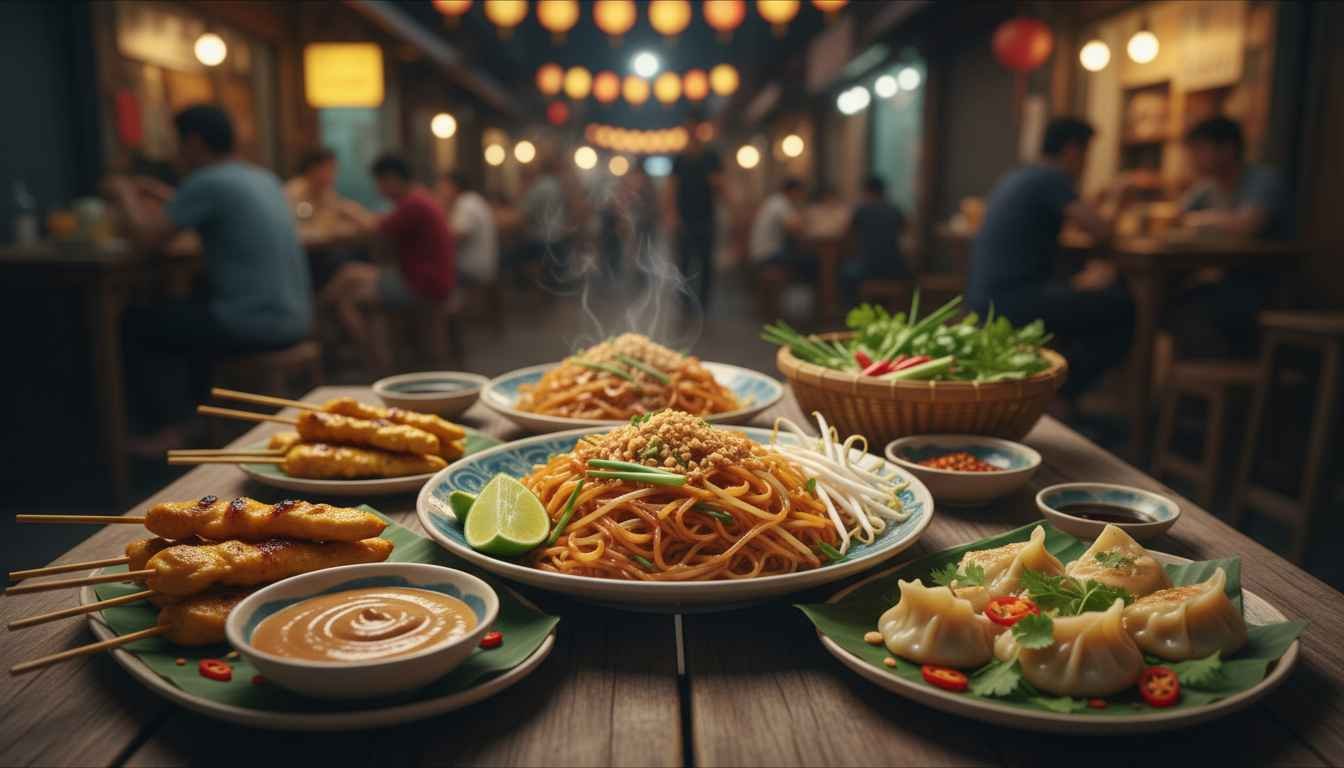
If you’ve ever wandered the vibrant streets of cities like Bangkok, Seoul, or Tokyo, you’ll know that the smell of sizzling street food is as much a part of the culture as the bustling crowds. The good news? You can recreate these mouth-watering dishes in your own kitchen. The bad news? It’s harder than it looks. Street food is all about fresh ingredients, perfect technique, and a little bit of love. But don’t worry – this list will guide you through some of the best Asian street food recipes, so you can bring the authentic flavors home with ease.
At Takes Two Eggs, we believe in making culinary experiences accessible to everyone. That means no secret ingredients or expensive gadgets – just fresh, delicious food you can enjoy right from your kitchen.
1. Pad Thai (Thailand)
Considered the crown jewel of Thai street food, Pad Thai is a stir-fried noodle dish that balances salty, sweet, sour, and spicy flavors in every bite. It’s quick, satisfying, and endlessly customizable. The key to an authentic Pad Thai lies in getting the sauce just right – too much sweetness and it’s cloying, too little and it lacks depth.
Ingredients/Materials:
- 200g rice noodles
- 150g shrimp (or chicken/tofu for a vegetarian option)
- 2 eggs
- 3 tablespoons fish sauce
- 1 tablespoon tamarind paste
- 1 tablespoon palm sugar
- 1 tablespoon soy sauce
- 2 tablespoons vegetable oil
- 1/4 cup crushed peanuts
- 2 spring onions, chopped
- 1 lime (cut into wedges)
- 1 red chili (optional)
Pad Thai is a perfect introduction to the world of Asian street food due to its balance of ingredients and ease of preparation. The only challenge is to perfect the stir-fry technique. Don’t overcrowd your wok or pan – give each ingredient enough space to cook properly.
Who Should Avoid This?
Those with shellfish allergies should skip the shrimp and opt for chicken or tofu. The sauce also contains fish sauce, so it may not be suitable for vegetarians unless substituted.
2. Gyoza (Japan)
Japanese gyoza are pan-fried dumplings packed with a savory filling of pork, cabbage, garlic, and ginger. Served with a tangy dipping sauce, they’re a popular snack at street vendors throughout Japan. Making the dough from scratch can be time-consuming, but using pre-made wrappers makes this recipe much simpler without compromising on flavor.
Ingredients/Materials:
- 200g ground pork
- 1/4 cabbage, finely chopped
- 2 cloves garlic, minced
- 1 teaspoon ginger, grated
- 1 tablespoon soy sauce
- 1 tablespoon sesame oil
- 1 pack gyoza wrappers
- Vegetable oil for frying
- 1/4 cup water
- For dipping: 2 tablespoons soy sauce, 1 tablespoon rice vinegar
To ensure crispy gyoza, it’s important to get the heat just right when frying. A medium-high heat will help achieve the perfect golden crust, while a lid will steam the top for a soft, delicate bite. The key is in the filling – don’t overstuff the dumplings, or they may burst open during cooking.
Who Should Avoid This?
Gyoza contains pork and gluten, so it is unsuitable for those following vegetarian or gluten-free diets. A gluten-free wrapper can be used as an alternative, and the filling can be swapped for tofu or chicken.
3. Banh Mi (Vietnam)
The Banh Mi is a Vietnamese sandwich that combines French and Vietnamese culinary traditions. The crispy baguette is filled with a variety of ingredients including grilled meats, pickled vegetables, and fresh herbs. It’s a crunchy, savory delight that captures the essence of Vietnamese street food in a single bite.
Ingredients/Materials:
- 1 baguette (crusty and light)
- 200g grilled pork (or tofu for vegetarian)
- 1/4 cucumber, thinly sliced
- 1/4 carrot, julienned
- 1 tablespoon cilantro
- 1 tablespoon pickled daikon (optional)
- 1 tablespoon mayonnaise
- 1 tablespoon Sriracha sauce (optional)
- 1 tablespoon soy sauce
One of the best things about Banh Mi is its versatility. You can easily swap out the pork for grilled chicken or tofu, and the pickled vegetables add the perfect tangy crunch. The balance of hot and cold ingredients – warm pork, cool cucumber – makes every bite a refreshing experience.
Who Should Avoid This?
This dish contains gluten and pork, so it’s not suitable for those with gluten sensitivities or following vegetarian diets. A gluten-free baguette can be used, and tofu can be substituted for the meat.
4. Satay (Indonesia)
Satay is a skewered meat dish that is marinated and grilled to perfection. Often served with a rich peanut sauce, satay can be made with various types of meat, including chicken, beef, and lamb. The smoky flavor of the grilled meat, combined with the creamy, spicy peanut sauce, makes this a favorite street food in Indonesia and beyond.
Ingredients/Materials:
- 300g chicken breast (or beef/lamb)
- 1 tablespoon soy sauce
- 1 tablespoon brown sugar
- 1 teaspoon turmeric powder
- 1 teaspoon cumin powder
- For peanut sauce: 1/4 cup peanut butter, 2 tablespoons soy sauce, 1 tablespoon lime juice, 1 teaspoon sugar, 1/2 cup coconut milk
- Wooden skewers
Grilling the meat over an open flame gives it a smoky flavor that pairs perfectly with the rich peanut sauce. For best results, marinate the meat overnight to allow the spices to fully penetrate. Serve the satay with rice or as a small snack.
Who Should Avoid This?
Satay contains peanut butter and soy sauce, which may cause allergic reactions for those with peanut or soy allergies. It’s also not suitable for vegetarians unless a plant-based protein is used.
5. Kimchi Fries (Korea)
Kimchi fries are a fusion dish that combines crispy fries with the tangy, spicy flavors of Korean kimchi. This dish is popular in Korean-American street food scenes but is easy to make at home. The key to perfect kimchi fries is getting the fries crispy enough to stand up to the strong flavors of the kimchi and sauce.
Ingredients/Materials:
- 2 large potatoes (for fries)
- 1/2 cup kimchi, chopped
- 2 tablespoons gochujang (Korean chili paste)
- 2 tablespoons soy sauce
- 1 tablespoon sesame oil
- 1 teaspoon sugar
- For garnish: sesame seeds, chopped spring onions
While this dish may not be the most traditional, it’s one of the most unique in terms of flavor combinations. The spicy, sour kimchi paired with crispy fries creates a satisfying contrast. The gochujang adds heat, while the soy sauce balances the dish with savory umami.
Who Should Avoid This?
This dish is spicy and may not be suitable for those with low tolerance for heat. It also contains gluten (from the soy sauce) and may not be suitable for those with gluten sensitivities unless a gluten-free alternative is used.