
You hand over your suitcase at check-in, and then it vanishes behind a belt. After that, you may wonder where it goes and how it finds the right plane. This guide follows one bag through the whole system, step by step. It covers the checked baggage process explained in plain language, from the first tag to the final carousel.
Along the way, you will meet scanners, sorting belts, loading crews, and transfer teams. Each stage has one job, and each job protects the next one. A clear tag keeps sorting simple, for example, while careful loading keeps bags safe in the hold. By the end, the mystery should feel much smaller, and your next trip should feel calmer too.
How Airport Baggage Systems Work, Step by Step?
Picture a single suitcase on a busy morning. Firstly, staff weigh it and check the booking. Secondly, a tag links the bag to one traveller and one flight. After that, belts and scanners take over, and people only step in when a bag needs help. The airport baggage handling system is this mix of machines, people, and clear rules.
Staff at each stage read the same tag, so the bag keeps one identity all day. Because the tag stays with the bag, a transfer team can trust what it says. If the tag falls off, however, the journey gets much harder. That is why strong tags and a spare label inside the bag matter so much.
What Counts as Checked Baggage?
Checked baggage is any bag you hand over at check-in for travel in the aircraft hold. It travels apart from you, so you cannot reach it during the flight. Large suitcases, holdalls, and sports bags often travel this way, for example. Smaller items can also be checked in, however, when they do not fit cabin rules.
Your bag must close fully, with straps tucked away and loose ends secured. Handles and wheels can catch on belts, so staff may ask you to fix them. In contrast, a tidy bag with flat sides moves through sorting with fewer stops. A quick check at home, therefore, can save time at the desk.
Hand Luggage vs Checked Luggage: What Is the Difference?
Hand luggage vs checked luggage comes down to where each bag travels. Cabin bags stay with you in the cabin, under set size and weight rules. Checked luggage travels in the hold, and you collect it after landing. Both types still face checks, but the checks happen in different places.
Cabin bags pass through screening with you at the passenger checkpoint. Hold bags, meanwhile, pass through screening behind the scenes after check-in. You keep control of a cabin bag, for example, yet you trust the system with a checked bag. For that reason, many travellers split items with care between the two bags.
Think about what you may need during the flight before you choose. Travel documents, medicines, chargers, and valuables usually belong close at hand. Bulky clothes and heavier items, in contrast, often suit the hold far better. If you want more detail on cabin choices, read about packing systems that keep weight down before you pack.
What Happens at Check-In?
Check-in is where your bag gains its identity for the whole journey. Staff confirm your booking, weigh the bag, and print a tag for it. They also give you a claim stub, which you should keep until you hold the bag again. That small stub, as a result, becomes your proof if anything goes wrong later.
Some airports use staffed desks, while others use self-service bag drops. At a bag drop, you print the tag yourself and place the bag on the belt. Staff still stand nearby, however, to help when a tag will not print or a bag will not fit. Either way, the same checks apply, and the same tag system guides the bag.
Baggage Tag Explained: What Do the Codes Mean?
Here is the baggage tag explained in plain terms. The tag shows your name, the flight number, and airport codes for departure and arrival. It also carries a barcode and a long number that the system can read at each scan point. Scanners use those codes, therefore, to route the bag without reading your name each time.
Airport codes use three letters, and each code stands for one airport. Your final destination code matters most, because sorters send the bag toward that code. A transfer airport may appear on the tag as well, for example, when you change planes. If you fly on one ticket with a connection, the tag should show the final airport. It should not stop at the first airport.
Look at the tag before the bag leaves your sight. Check the destination code and the flight number against your booking. Mistakes are rare, but a wrong code at this point can send a bag the wrong way. A quick glance, similarly, costs seconds and can prevent a long search later. Keep the claim stub safe, and take a photo of the tag as well if you wish.
Baggage Allowance Rules Explained: Why Do Limits Vary?
This is the baggage allowance rules explained without fixed numbers. Each airline sets its own rules for bag size, bag weight, and bag count. Rules can also change with the ticket type, the route, and the cabin you booked. For that reason, one airline may allow a bag that another airline turns away.
Always check the rules for your own airline and ticket before you pack. Look at the airline website or your booking confirmation, and note the limits that apply to you. If you change airline mid-journey, check both sets of rules, because the stricter rule may apply. When in doubt, ask the airline directly, rather than trusting a general guide.
Oversized or overweight bags may face extra charges or special handling. Charges vary widely, so this guide gives no fee figures here. Instead, treat the airline page as the only source that counts for your trip. Packing light, in contrast, keeps choices simple and avoids surprises at the desk.
Baggage Screening Explained: What Happens Behind the Wall?
Here is the baggage screening explained in simple terms. After check-in, your bag rolls away from view and passes through security screening. Machines scan the contents and look for items that need a closer look. You do not watch this stage, but staff and machines work through each bag in turn.
Screening protects the flight, so it treats every bag the same way at first. Most bags pass quickly, and then they move on toward sorting. A small number, however, need extra checks, and those bags take a different path. Delays here rarely mean trouble, and they often end with a bag cleared and sent onward.
This stage sits apart from the checks you face as a passenger. You go through security and boarding checks with your cabin bag, while hold bags take their own route. Both routes share one aim, which is a safe flight for all on board. Knowing that split helps you see why your checked bag disappears so soon after check-in.
How Does Screening Decide What Needs a Closer Look?
Scanners build an image of what sits inside each bag. Staff review images that look unclear, dense, or unusual in shape. They may also open a bag when the image alone cannot settle a question. When staff open a bag, they should close it again with care and leave a note inside in many cases.
Packing in a tidy way helps scanners read your bag with ease. Spread dense items apart, for example, and keep cables from tangling into one solid mass. Liquids and sharp items should follow the airline rules for hold baggage, so check those rules first. If a rule bans an item, leave it at home rather than risking a search and a delay.
Do not lock a checked bag with a lock that staff cannot open if they need to. A forced lock can break, and the bag may then travel with a damaged fastening. Use a lock approved for travel screening where one is needed, or leave the bag unlocked. Either choice, similarly, beats a broken zip at the carousel.
How Luggage Is Sorted at Airports?
This section covers how luggage is sorted at airports in everyday language. Sorting sends each bag toward the right flight, the right loading area, and the right cart. Belts carry bags past scanners, and each scan points the bag down the next path. Bags for the same flight, as a result, gather in one place before loading starts.
Sorting halls can feel huge and noisy, with belts crossing at many levels. Staff watch the flow, clear jams, and pull out bags that need attention. Machines do the routing, however, while people handle the exceptions that machines cannot solve. That teamwork keeps thousands of bags moving during busy peaks.
Airport Baggage Belt System: Belts, Trays and Tugs
The airport baggage belt system links check-in, screening, sorting, and loading in one long chain. Belts move bags between halls, while trays can carry single bags along set tracks. At some airports, each bag rides in its own tray, which keeps it apart from other bags. Trays also make jams less likely, because one stuck bag does not block a whole belt.
Once sorted, bags reach carts or containers near the aircraft stand. Small vehicles called tugs then tow those carts across the apron to the plane. Drivers follow set routes and speed rules on the apron, for example, and they give way to aircraft. Weather can slow this stage, however, when rain, ice, or lightning stops work on the open apron.
To see where this hall sits, read about how the wider airport fits together from terminal to runway. The baggage hall works behind the scenes, yet it shapes the journey as much as any gate. When belts stop, flights feel it fast, so airports plan backup routes for busy days.
How Does the System Read Each Tag?
Scanners along the belts read the barcode on each baggage tag. Each read updates the bag record and confirms the bag took the right turn. If a read fails, the bag diverts to a manual station, where staff read the tag by eye. That fallback, therefore, catches bags with creased, torn, or faded tags.
Tag placement helps scanners do their job well. Staff fix the tag where scanners can see it, with the barcode facing outward. Travellers should not cover the tag with straps, stickers, or old tags from past trips. Old tags, in particular, can confuse a scanner or a tired pair of eyes.
Remove old tags before every trip, and keep the new tag clear. A fresh tag with a clean barcode gives scanners the best chance of a first-time read. As a result, your bag spends less time in manual handling and more time on the right path. Small habits at check-in, similarly, pay off deep inside the sorting hall.
How Baggage Is Loaded Onto Planes?
Now we reach how baggage is loaded onto planes in practice. Loading crews take sorted bags from carts or containers and place them in the aircraft hold. They load with care for weight, balance, and the order of unloading at arrival. Bags for the first stop, for example, may sit where crews can reach them first.
Crews also keep fragile and heavy bags in mind as they stack the hold. Heavy bags go low, while lighter bags sit on top where they press down less. Staff secure loads so bags do not shift during take-off, flight, or landing. Good loading, as a result, protects both the bags and the balance of the aircraft.
Loading runs on a tight clock during the aircraft turnaround between arrival and departure. Cleaners, fuellers, caterers, and baggage crews all work in the same short window. Baggage crews must finish, therefore, before the hold doors close and the plane pushes back. A late bag can still miss the flight when the doors close on time.
What Happens Inside the Hold?
The hold is a set of cargo spaces below the cabin floor. Some holds take loose bags, while others take locked containers called unit load devices. Containers let crews load many bags at once, for example, and they keep bags grouped by flight. Loose loading, in contrast, suits smaller aircraft with smaller holds.
Temperature and pressure in the hold stay within limits that suit baggage. Pets and sensitive cargo, however, may travel in set areas with extra care. Your suitcase does not need special treatment, but it should survive bumps, stacks, and shifts. Strong cases and firm packing, therefore, matter more than a soft outer cover.
Oversized Baggage Handling: What Travels Differently?
This route covers items that do not fit normal belts and sorting lines. Skis, golf bags, surfboards, large instruments, and strollers often need this route. These items may go to a special drop point at check-in, for example, instead of the normal belt. Staff then move them by hand or on wide belts to screening and loading.
At arrival, oversized items often appear in a special area, not on the main carousel. Look for signs for oversized or outsize baggage near the reclaim hall. If you cannot see your item, ask staff before you leave the hall. Oversized baggage handling varies by airport, so check the signs and ask early when you land.
| Stage | What happens to the bag | Where you are |
|---|---|---|
| Check-in | Tag printed and fixed to the bag | At the desk or bag drop |
| Screening | Contents scanned behind the scenes | Heading to the departure gate |
| Sorting | Belts and scanners route the bag | Waiting near the gate |
| Loading | Crews place the bag in the hold | Boarding the aircraft |
| Claim | Bag unloaded and sent to the carousel | Walking to the reclaim hall |
Baggage Transfer Between Flights: How Does a Bag Change Planes?
Baggage transfer between flights is the stage most travellers never see. When you change planes, your bag must leave the first aircraft, cross the airport, and reach the next one. Transfer teams unload it, scan the tag, and send it toward the new flight. The bag then joins the sorting flow again, just as it did at check-in.
Through-checked bags stay in the system when you fly on one ticket. You do not collect and re-check them at the transfer airport in most cases. Some journeys, however, need you to collect and re-check a bag, for example when tickets sit apart. Always check your booking, because the answer shapes what you do at the transfer airport.
Transfer work runs against the clock, and the gap between flights sets the pace. Ground teams need time to unload, move, sort, and load the bag again. When the gap is short, teams may rush the bag straight to the next aircraft. During a long gap, the bag may wait in a set area until loading starts.
Why Are Short Connections Risky for Bags?
Short connections leave little room for a delay at any stage. A late arrival, a slow unload, or a long drive across the airport can eat the whole gap. Your bag, meanwhile, cannot run through the terminal as you can. It must follow belts, carts, and security rules, even when time runs short.
You may still make the flight while your bag does not, because people and bags take different paths. Staff may load the bag onto the next flight instead, and then send it on to you. That outcome feels frustrating, but it beats a bag sent to the wrong airport. If your connection looks tight, pack essentials in your cabin bag as a backup.
Airport Baggage Claim Explained: From Plane to Carousel
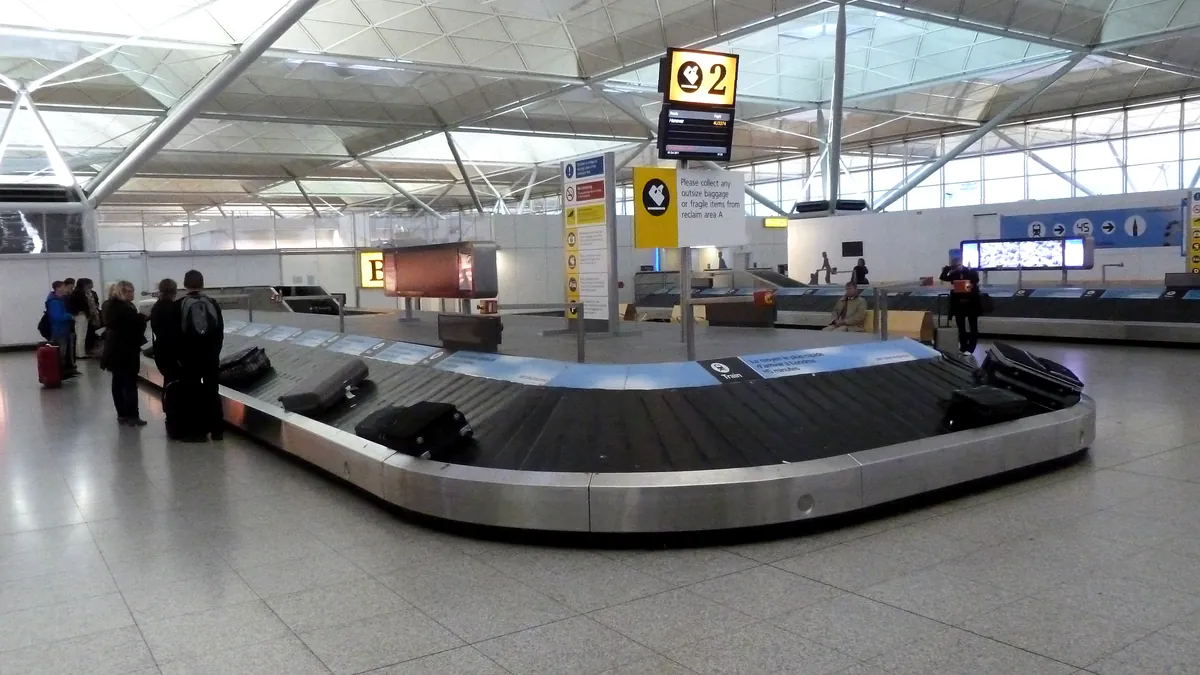
Here is the airport baggage claim explained from landing onward. After the plane parks, crews unload the hold and move bags to the reclaim hall. Bags travel on carts to the hall, and staff load them onto the belt for your flight. Screens in the hall show the flight number and the belt number to use.
Unloading takes time, so bags rarely appear the moment you reach the hall. Crews must open the hold, unload in order, and drive carts to the right belt. Priority bags may come out first on some flights, while other bags follow in turn. Waiting, therefore, does not mean your bag went missing.
Stay near the belt for your flight and watch each bag as it passes. Check the tag or a clear mark before you lift a bag, because many bags look alike. If you lift the wrong bag, you create work for staff and worry for another traveller. A bright strap or a clear label helps you spot your own bag at a glance.
Baggage Carousel Explained: Why Do Bags Arrive in Waves?
Here is the baggage carousel explained in simple terms. The carousel is a moving belt loop that brings bags from the loading area into the hall. Staff feed bags onto the belt in batches, so bags arrive in waves rather than all at once. Each wave reflects one cart load, for example, or one section of the hold.
Bags circle the loop until someone collects them, which gives you time to spot yours. Large or heavy bags may need a lift with both hands, so stand clear of other travellers. Do not reach across the belt or climb onto it, because the belt keeps moving. Step forward, lift with care, and move away from the belt at once.
After claim, you may face customs checks for travellers before you leave the airport. Officers may ask about goods you bring in, and they may inspect bags in some cases. Keep your claim stub until you clear those checks, because staff may ask to see it. Once you leave the hall, keep the stub until you reach your final stop.
Lost Luggage Process Explained: What Happens When a Bag Does Not Arrive?
Here is the lost luggage process explained without panic. Most bags that miss a flight are delayed, not lost for good. Staff trace the bag by its tag record, find where it went, and send it on the next suitable flight. The airline then arranges delivery or collection, based on its own process and your details.
Delayed bags often arrive within a day or two, though no guide can promise a set time. Each case depends on flight schedules, transfer gaps, and where the bag sits. Staff should give you a reference number and a way to check progress. Keep that number safe, and use it in every message about the bag.
True loss is rarer than delay, and it follows a longer claims process. That process uses the tag record, your description, and the contents list you provide. For that reason, a clear description and photos of your bag help staff a great deal. If you need background on responsibility rules, read about carrier liability and cargo claims before you file anything.
What Should You Do at the Airport?
Report a missing bag before you leave the airport, at the baggage desk for your airline. Give staff your claim stub, your flight details, and a clear description of the bag. Include the colour, size, make, and any strap or mark that sets it apart. Staff will file a report, and you should leave with a reference number in hand.
Share an address and phone number where the airline can reach you with ease. Check that staff spell your name and address right, because a small error can stall delivery. Ask how updates will reach you, and ask what to do if the bag does not arrive soon. Do not leave the hall with only a verbal promise, because the written report protects you.
- Firstly, stay calm and head straight to the baggage desk before you leave.
- Secondly, hand over your claim stub and describe the bag in clear detail.
- Then, take the reference number and check the contact details on the report.
- Finally, keep receipts for essentials you must buy while you wait.
What Happens to Unclaimed Luggage?
So, what happens to unclaimed luggage? Staff remove bags that circle the carousel with no owner in sight. They check the tag, search the system record, and try to reach the owner. If the owner stays unknown, staff move the bag to a secure storage area for further checks.
Storage teams keep the bag while they search for clues about its owner. They look for name labels, booking links, and tag numbers that point to a flight. After set storage periods, which vary by airport and airline, unclaimed bags may pass to lost-property processes. Items may then face auction, donation, or disposal, based on local rules and the contents.
Security rules add a stricter path for bags with no owner and no clear record. Staff may treat such a bag as a security matter and follow set safety steps. That is one more reason to label bags well and keep tags clear. A named bag, in contrast, gives staff a fast route back to you.
Questions Travellers Ask Most
Can You Track a Checked Bag During the Journey?
Some airlines show bag scans in an app or on a booking page. Scans may show check-in, loading, transfer, and arrival, for example. Coverage varies, however, because not every airport shares scan data in the same way. Check your airline app after check-in to see what it offers for your flight.
Even with tracking, scans can lag behind the real position of the bag. A bag may sit loaded while the scan still shows sorting, for instance. Use tracking as a guide, not as a live map of the belt. If a scan looks wrong, staff at the airport desk can check the record with you.
Why Did My Bag Arrive on a Later Flight?
A bag can miss a flight for simple reasons that have nothing to do with carelessness. A tight transfer, a late arrival, or a full hold can each leave a bag behind. Staff then send it on the next flight with space, which may land hours later. Your booking, for example, may sit on one ticket while the bag waits for the next departure.
Weight and balance rules can also hold a bag back on a full flight. Crews must respect load limits, so a bag may wait when the hold reaches its limit. That choice protects the flight, even though it disrupts your plans. Staff should still trace the bag and arrange onward delivery once it lands.
What If My Bag Arrives Damaged?
Check your bag at the carousel before you leave the reclaim hall. Look at wheels, handles, zips, and the shell for cracks, tears, or breaks. Report damage at the baggage desk at once, because claims get harder after you leave. Staff will note the damage, and you should keep the report and photos of the bag.
Normal wear, such as scuffs and small scratches, may not count as damage under airline rules. A broken wheel or a split seam, in contrast, may qualify for repair or replacement. Rules vary by airline, so ask staff what your airline offers in your case. Keep the bag and the tag, similarly, until the claim reaches a clear outcome.
Should You Put Valuables in Checked Baggage?
Keep valuables, key documents, and medicines in your cabin bag when you can. Checked bags pass through many hands and machines, and you cannot watch them. A cabin bag, in contrast, stays with you from gate to gate. That control matters most for items you cannot replace with ease.
Airline rules may also limit liability for valuables in checked bags. Check the rules for your airline before you pack cameras, jewellery, or large sums of cash. When in doubt, carry the item with you or leave it at home. For help, look at how flight booking systems show ticket rules, then check the airline page.
How to Give Your Bag the Best Chance?
You cannot control belts, weather, or transfer gaps, but you can control how your bag enters the system. Label the bag outside and inside, with your name and a phone number. Remove old tags, fix the new tag in clear view, and take a photo of the bag. Those small steps, as a result, help staff at every scan point.
Pack with the journey in mind, not just the destination. Put essentials in your cabin bag, keep straps tucked away, and close the bag firmly. Choose a bag you can spot at a glance, with a strap or mark that stands out. A bag that looks like fifty others, in contrast, invites mix-ups at a busy carousel.
Finally, allow time at each end of the trip. Arrive with time to check in calmly, and stay in the reclaim hall until your bag appears. If it does not appear, report it at once and keep your reference number safe. Now you know how airport baggage systems work, from tag to carousel, and you can travel with far less guesswork.