A metro train glides into a station every few minutes. Passengers step off, others step on, and the doors close again. The whole exchange takes seconds. Behind that smooth moment, however, a whole system works together. This guide explains how metro systems work in plain terms. It treats a metro as a designed system, not as one city guide. Therefore, you can use the same ideas on almost any network. In short, this is a metro system explained from the first map to the last stop.
Picture one journey through the system. Firstly, you find your line on a map. Secondly, you enter a station and pass through the fare gates. Thirdly, you wait on a platform while signalling keeps trains apart. Finally, you ride, change lines if needed, and leave through another set of gates. For example, a clear map helps you choose the right platform. Similarly, a sensible fare system keeps the gates moving. As a result, small design choices shape the whole ride.
What Is a Metro System, in Plain Terms?
A metro moves large numbers of people through a city at frequent intervals. Trains run on their own tracks, separate from road traffic. Consequently, a metro avoids most traffic jams. Stations sit close together in busy areas. In contrast, longer gaps appear where fewer people travel. Planners shape each network around demand, geography, and cost. No two networks look identical, yet most share the same building blocks.
How Is a Metro Different From Light Rail?
Metro trains usually carry more people than light rail vehicles. They also run more often at busy times. In addition, metro tracks normally stay fully separate from streets. Light rail, by contrast, sometimes shares road space with cars and buses. Therefore, light rail suits lighter demand and shorter trips. Metro suits dense corridors where crowds need fast, frequent service. However, the boundary between the two blurs in practice. Some systems mix metro-style sections with street-running sections. Check separation, frequency, and capacity instead of trusting a name alone. This metro vs light rail contrast also helps you compare other rail ideas. How railway systems work in general shows how heavier rail fits the same picture.
Capacity shapes almost every other choice. A metro line needs wide platforms, strong signalling, and room for crowds. Light rail needs less of each, so builders can fit it into tighter streets. Consequently, a city weighs demand against cost and disruption. A metro costs more to build, yet it moves more people per hour. A light rail line costs less, yet it may fill up sooner. Planners therefore match the tool to the corridor. Neither option suits every street, and neither option fails everywhere.
Why Do Some Metros Run Underground, and Others Above Ground?
Underground tunnels free the surface for buildings, parks, and streets. They also dodge junctions, crossings, and weather at street level. However, tunnelling costs more and takes longer to build. Elevated tracks cost less than tunnels in many cases. They also let builders work without digging deep shafts. In contrast, elevated structures change the look and sound of a street. At-grade tracks sit at ground level. Builders use them where land allows and crossings stay manageable.
Each choice trades cost, speed, disruption, and impact on neighbours. For example, a tunnel suits a dense centre with narrow streets. An elevated line suits a wide road with room for pillars. Meanwhile, an at-grade section suits open land near a city edge. Many networks mix all three forms. A line dives underground downtown, rises onto a viaduct further out, and then runs at ground level near a depot.
How Do Subway Lines Work?
What Does One Line Consist Of?
Think of a line as a chain of stations joined by track. This is subway lines explained at the simplest level. Each line has two ends, called termini. Trains reverse at a terminus and head back along the same line. Some lines add branches, so trains split toward different ends. Others form loops, so trains circle back to the start. Depots sit off the main line. Staff store, clean, and maintain trains there overnight.
Sidings give extra room to park trains near busy stations. Power, signalling, and communications run alongside the track. Together, these parts let one line carry thousands of people each hour. Colour and a number or letter identify each line on maps and signs. Riders therefore follow colour first and station names second. In addition, direction signs name the terminus, not a compass point. You board a train “toward” its final station. That habit prevents most wrong-direction mistakes.
Stopping patterns add another layer. Most metro trains stop at every station. Some networks add express or skip-stop patterns at busy times. An express train skips smaller stations and saves time for longer trips. However, express patterns complicate platforms and timetables. For that reason, most metros keep every-stop service. Frequency does the heavy lifting instead. Short gaps between trains matter more than raw speed. Planners therefore protect frequency first. Speed comes second, and only where stops allow it.
What Happens at Metro Interchange Stations?
Metro interchange stations join two or more lines in one place. They turn separate lines into a network. A rider changes lines there without leaving the paid area. In most cases, a walkway, staircase, or escalator links the platforms. Some interchanges use cross-platform design. There, you step off one train and board another across the same platform. Other interchanges need a longer walk through tunnels or halls. Clear signs matter most on those longer walks. Good signs show line colours, direction termini, and walking time. Poor signs force riders to guess, and guessing creates crowding.
Consequently, designers place signs at every decision point. They also repeat the key details: line, direction, and next stations. At the busiest interchanges, staff guide flows at peak times. In addition, interchanges often connect with other transport. Buses, trams, and mainline trains may share the same hub. How bus and coach networks work explains how those surface links fit around a rail hub. A well-planned interchange therefore shortens the whole journey, not just the change itself.
How Does Metro Map Design Make a Network Readable?
A metro map is a diagram, not a street map. This is metro map design explained in one sentence: designers bend geography to protect clarity. Lines run straight or at gentle angles. Stations sit at even spacing, even when real distances vary. Colours separate lines at a glance. Interchanges stand out with clear linking symbols. As a result, riders grasp the network in seconds. A geographically exact map would cramp central stations together. It would also stretch outer branches across the page. Riders would struggle to read names and follow lines.
Designers therefore trade exact distance for legibility. They keep the order of stations true. Interchange positions stay true as well. They let distance flex. In addition, good maps add a few honest aids. Zone boundaries appear where fares depend on zones. Step-free access symbols help riders who need lifts. Meanwhile, a compact inset can show a dense centre in more detail. The best maps hide complexity without hiding choices. They show every line, every interchange, and every terminus. They leave out clutter that adds no travel decision.
How Do Metro Stations Work?
What Happens Between the Street and the Platform?
A station guides you through levels in a set order. This is how metro stations work, step by step. Firstly, an entrance leads you down, or up, from the street. Secondly, a concourse holds ticket machines, gates, and information. Thirdly, stairs, escalators, or lifts take you to platform level. Each level has one job. The concourse handles payment and directions. The platform handles boarding and alighting. Keeping those jobs apart prevents bottlenecks. Fare gates sit between the unpaid and paid areas.
You tap a card, phone, or ticket to enter. The gate records your entry point. At the exit, you tap again, and the system works out your fare. Staff watch the gates at busy times. They help riders with luggage, wheelchairs, and pushchairs. In addition, wide gates serve riders who need more space. Signs repeat the essentials at each level: line colour, direction, and platform number. Announcements add live updates about delays or platform changes. Together, levels, gates, and signs turn a busy box into a readable route.
Station design also handles safety and comfort. Ventilation moves fresh air through tunnels and halls. Lighting stays bright on platforms and in passageways. They also plan for disruption. A closed escalator needs a signed alternative route. A crowded platform needs room for waiting riders to stand clear of doors. Small details, repeated across a network, add up to a calmer station.
What Are Metro Platform Screen Doors For?
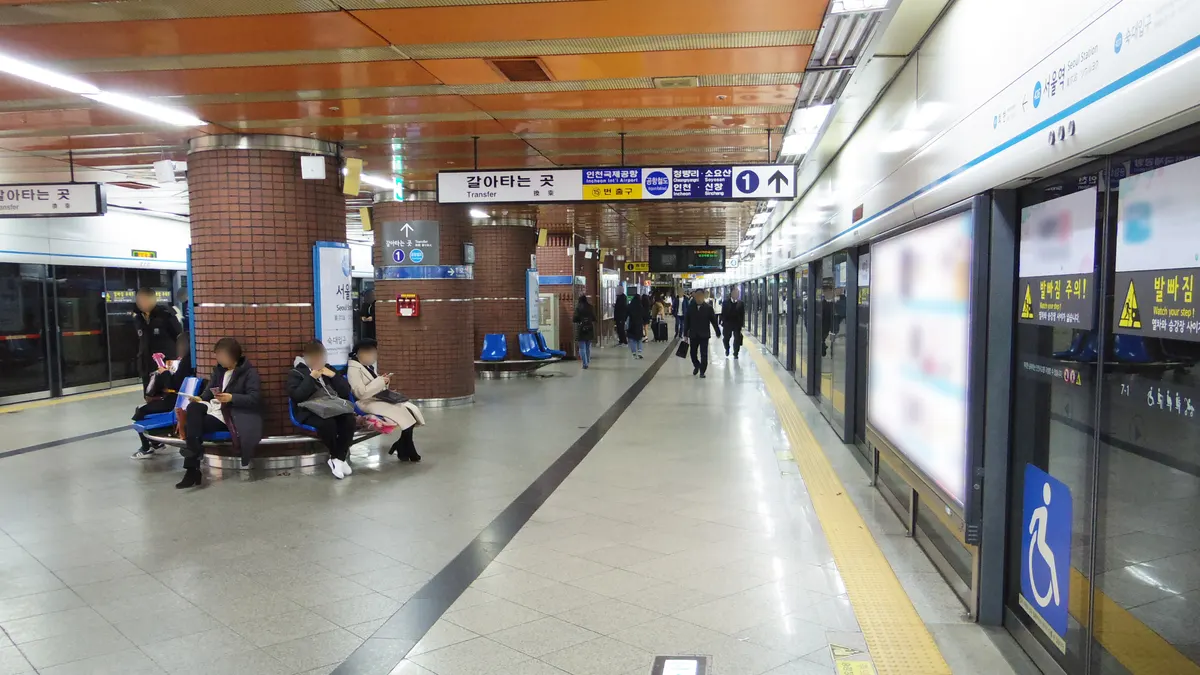
Metro platform screen doors are glass barriers along the platform edge. Doors in the barrier line up with train doors. They open only when a train stands at the platform. Their main job is safety. They stop people and objects falling onto the track. They also stop crowding from pushing riders too close to the edge. In addition, they help climate control in enclosed stations. Air conditioning stays on the platform side, not in the tunnel. That separation cuts energy waste and keeps platforms cooler.
However, screen doors add cost and complexity. Trains must stop in exactly the right place. Doors on the train and doors on the platform must align. Signalling and door controls therefore work as one system. Half-height gates offer a cheaper middle path. They block falls and deter track access, yet they leave the top open. Full-height doors suit enclosed, air-conditioned stations best. Half-height gates suit open or older stations where full doors prove impractical. Either way, the principle stays the same: separate people from moving trains until boarding begins.
How Do Stations Cope With Crowds?
Crowds move best when flows stay separate. Arriving riders need a clear path off the platform. Boarding riders need space beside the doors, not in front of them. Designers therefore mark waiting areas away from door zones. They also set one-way routes at the busiest times. Escalators run in the busier direction during peaks. Staff may hold entry briefly when a platform fills up. That pause looks annoying, yet it prevents dangerous crushes below. Meanwhile, wider passages and extra exits spread the load.
Clear floor markings help too. A painted line shows where to stand and where to walk. Riders follow those cues without thinking. Public transport etiquette covers the small courtesies that keep these flows moving. Letting people off first, for example, speeds boarding for everyone. Standing clear of doors helps the next train leave on time. Small habits, multiplied across thousands of riders, shape the peak.
How Do Metro Fares Work?
This section explains how metro fares work in plain terms, from zones to contactless taps. Fares look technical at first. In practice, most networks use one of a few simple models. The details vary, so always check the local fare guide.
What Is a Metro Zone Fare System?
A metro zone fare system divides a network into rings or areas. Your fare depends on how many zones you cross. This idea needs a plain example. A short trip inside one zone costs less than a trip across three zones. A trip that starts and ends in the same zone stays in the lowest band. In contrast, a cross-city trip passes through several bands. The system counts zones from your entry tap to your exit tap. It then charges the matching band. Zones keep fares simple to explain. Riders can work out a fare from a zone map. They need no distance table and no station-by-station list.
However, zone edges create quirks. Two stations close together can sit in different zones. A short hop across a boundary can cost more than a longer ride inside one zone. Planners therefore draw boundaries with care. They try to place edges where fewer short trips cross them. How regional travel zones work shows how the same zone idea applies across wider regions. In addition, many networks cap daily spending. A cap limits what you pay in one day, however many trips you make. Caps use general rules, and each network sets its own levels. Check the local fare guide before you travel.
How Do Flat Fares and Distance-Based Fares Differ?
A flat fare charges the same amount for every trip. Distance does not matter. A short hop costs the same as a long ride. Flat fares suit small, dense networks. They also suit riders who value simplicity. You know the fare before you travel. However, flat fares treat short and long trips alike. Short-trip riders pay relatively more per stop. Long-trip riders pay relatively less. Distance-based fares charge by how far you travel. Each extra stop or zone adds a step to the fare.
Riders pay in closer proportion to the service they use. In contrast, distance fares need more explanation. Riders must learn bands, zones, or per-stop steps. Gates must record both entry and exit. Otherwise, the system cannot tell how far you travelled. Some networks blend the two ideas. A flat fare may cover a central area. Distance steps then apply beyond that area. Others use time-based fares. One payment covers unlimited trips within a set period. Each model trades simplicity against fairness. No model wins on both counts. The right choice depends on network size, trip patterns, and fare policy.
How Does Contactless Payment Change the Journey?
Contactless metro payment explained simply means tapping to travel. You tap a bank card, phone, or watch at the gate. The gate reads the card and opens. You tap again at the exit. The system then matches entry and exit and works out the fare. No paper ticket, no machine queue, and no exact change. For example, a phone wallet holds the same card you already carry. Similarly, a dedicated travel card uses the same tap readers. The reader does not care which device you present. It cares that the same device taps in and taps out. Mixing devices breaks the match.
If you tap in with a phone and out with a card, the system sees two incomplete trips. Therefore, use one device for the whole journey. How travel money works explains the wider payment choices behind that habit. Contactless systems also handle caps and discounts in the background. They add up trips across a day or week. They then apply any cap or discount the network offers. Riders see the result on a statement or app. However, contactless payment still needs a fallback. Cards fail, phones run flat, and readers glitch. Ticket machines and staffed windows therefore stay in place. A good network never strands a rider over one failed tap.
How Often Do Metro Trains Run?
What Do Metro Frequency and Headways Mean?
Frequency means how many trains run in a set period. Headway means the gap between one train and the next. Metro frequency and headways describe the same service from two angles. A headway of five minutes means a train every five minutes. Short headways change how riders plan. You stop checking a timetable. You simply turn up and wait a few minutes. That freedom defines metro travel. In contrast, a twenty-minute headway forces timetable planning. You time your arrival, and a missed train costs dearly.
Planners therefore protect short headways on busy lines. They add trains, shorten turnarounds, and tighten signalling. However, headways have physical limits. Trains need safe separation. Platforms need time to clear between arrivals. A terminus needs time to reverse each train. Pushing headways too short creates bunching. Two trains arrive together, then a long gap follows. Riders crowd the first train and wait for the second. Even headways beat uneven headways, even when the average looks the same. Control rooms therefore hold trains briefly to restore even gaps. A short hold now prevents a long gap later.
How Does Metro Rush Hour Planning Work?
Metro rush hour planning matches trains to peaks in demand. Demand rises sharply in the morning and again in the evening. Commuters head one way in the morning and reverse in the evening. Planners therefore run more trains at peaks and fewer off-peak. They also lengthen trains where platforms allow it. Longer trains carry more people without extra drivers or paths. In addition, they stagger start times with employers where possible. A small shift in office hours flattens the sharpest spike. Station staff play a part too. They guide queues, manage gates, and hold entry when platforms fill.
Meanwhile, control rooms watch loads in real time. They add a spare train when a gap threatens. They hold a train when a platform needs to clear. Commuter life shows how those peaks shape daily routines beyond the platform. Rush-hour planning also covers the shoulders. Demand builds before the peak and fades after it. Planners ramp service up and down gradually. A gradual ramp keeps the last commuters moving. Good planning treats each day type on its own terms.
Why Do Gaps and Delays Happen?
Delays start small and grow fast on a busy line. A train waits extra seconds at a crowded platform. Doors stay open while late riders board. The next train then waits outside the station. Boarding takes longer still. That loop, repeated station by station, creates a gap. Engineers call the pattern knock-on delay. One late train delays the trains behind it. Signalling holds following trains at safe distances. A gap opens ahead of the late train and bunches form behind it.
Weather, faults, and incidents add other causes. A signal fault can hold trains across a whole section. A passenger alarm can stop a train between stations. Staff then follow set procedures. They check, communicate, and restart service step by step. Riders help most by following instructions. Stay clear of doors when they close. Move down inside the carriage. Let arriving riders off first. Those habits shorten dwell times. Shorter dwells keep gaps even. In contrast, holding a door open delays everyone, including the person holding it.
How Do Trains Stay Safe and on Time?
How Does Metro Signalling and Automation Work?
Metro signalling and automation keep trains apart and on schedule. Signalling divides track into sections, often called blocks. Only one train occupies a block at a time. Sensors detect each train in its block. Signals or cab displays then tell the next train to wait or proceed. Automation adds a further layer. Automatic train operation controls speed, braking, and stopping. It stops each train at the same mark on the platform. Drivers, where present, supervise the system. They watch the platform, manage doors, and respond to problems. In contrast, older systems rely more on the driver.
The driver reads lineside signals and controls speed by hand. Newer systems move control into the cab and the control room. Computers track every train in real time. They adjust speeds to keep even gaps. They also protect against overspeed and missed stops. However, automation never removes human oversight. Control room staff watch the whole network. They intervene when sensors disagree or a fault appears. Maintenance teams test signalling nightly. That nightly work keeps daytime service safe. A signalling fault therefore triggers caution, not risk-taking. Trains slow down or stop until staff confirm the section is safe.
What Does a Driverless Metro Actually Do?
A driverless metro runs without a driver in the cab. Computers control acceleration, braking, and door operation. Staff still run the system from a control room. In short, a driverless metro explained simply means the driving task moves from cab to control room. The system stops the train if sensors detect an obstruction. Human staff monitor cameras and alarms. They speak to riders through intercoms. They send staff to a train when needed. Driverless operation suits new lines best.
Builders design platforms, doors, and signalling as one package. Retrofitting an older line costs more. Older tunnels, platforms, and curves need upgrades first. In addition, driverless systems need strong fallback plans. A failed train must move or clear quickly. Staff must reach any point on the line fast. Riders must know how to get help. Emergency intercoms, clear signs, and staffed stations cover those needs. Automation also changes jobs, not just trains. Drivers move into control, maintenance, and customer roles. The system still needs people. It needs them in different places, watching, fixing, and helping.
What Happens When Something Goes Wrong?
Control rooms follow set steps when trouble appears. Firstly, staff confirm what happened and where. Secondly, they protect the affected section. Thirdly, they tell riders what to expect. Clear information matters as much as quick fixes. A rider who knows the plan waits more calmly. A rider left guessing crowds the platform. Staff therefore announce the problem, the affected stations, and the alternative route. They repeat the message as the picture changes. Meanwhile, engineers head to the fault.
Other trains hold, reroute, or turn back early. Buses may cover a closed section where roads allow. Service returns in stages, not all at once. Gaps stay uneven for a while. Control rooms then restore even headways step by step. Riders can help by checking live updates before travelling. They can also allow extra time at peaks. A small buffer turns a delay into an inconvenience. Without a buffer, the same delay becomes a missed connection.
How Do Metro Networks Grow Over Time?
How Do Metro Networks Grow?
Networks grow in stages, rarely all at once. This is how metro networks grow, in broad outline. Planners first map where people travel. They study housing, jobs, schools, and hospitals. A corridor with heavy, steady demand suits a metro line. Next, planners test route options. They weigh tunnel, elevated, and at-grade sections. Station sites and interchange points follow in the same assessment. They also weigh disruption during construction. A route through a dense centre serves more people. It also costs more and disrupts more streets. A route along open land costs less.
It may serve fewer people, however. Public consultation follows. Residents, businesses, and local groups comment on the plans. Planners adjust station sites and construction methods in response. Funding and approvals then decide the pace. How high-speed rail works shows a different scale of the same planning logic. Once builders start, they work section by section. They build tunnels, stations, and systems in parallel. Testing follows construction. Empty trains run for weeks or months. Staff test signalling, doors, ventilation, and evacuation. Only then do passengers board. Extensions repeat the same cycle. Each new section joins the network at an interchange or terminus. The map gains a branch, and riders gain new direct trips.
When Does a City Choose Metro, and When Light Rail?
Demand decides the choice more than fashion does. A corridor with very heavy demand needs metro capacity. A corridor with moderate demand suits light rail. Cost decides the rest. Metro tunnels cost more per kilometre than street tracks. Light rail fits tighter budgets and tighter streets. Speed and separation also matter. A metro avoids traffic entirely. Light rail may wait at junctions. However, light rail reaches more streets directly. It stops closer to homes and shops. The table below sums up the trade-offs in general terms. Each corridor still needs its own study.
| Feature | Metro | Light rail |
|---|---|---|
| Typical setting | Dense corridors | Streets and suburbs |
| Track separation | Fully separate | Shared in places |
| Stop spacing | Wider gaps | Closer stops |
| Capacity | Higher | Lower |
| Build cost | Higher | Lower |
How Do Hybrid Designs Blur the Choice?
Hybrid designs blur the table. Some light rail lines run in tunnels downtown. Some metro lines run at street level in suburbs. Planners pick features corridor by corridor. They may tunnel the busy centre and run at grade further out. They may also phase a project. A light rail line today can grow into a metro-style line later. That flexibility matters when funding arrives in stages. The key question stays constant: how many people need to move, and how reliably? Answer that question first. The vehicle type follows from the answer.
How Can You Read Any Metro System Quickly?
What Should You Check Before Your First Ride?
A few checks save most first-ride confusion. Work through this list before you set out. It suits any network, in any city.
- Find your line colour and direction terminus on the map first.
- Count the stops to your destination, and note any interchange.
- Check which exit or interchange passage your route needs.
- Confirm how fares work: zones, flat fare, or time-based payment.
- Pick one payment device, and use it to tap in and tap out.
- Check live status for delays, closures, or platform changes.
- Allow extra time at peak hours, and at large interchanges.
- Note the last train time, so a late return stays possible.
Travel apps help with live status and step-by-step directions. Travel apps and digital boarding passes explains how those tools handle tickets and live updates on wider trips. However, apps never replace station signs. Signs show the live truth at the platform. An app can lag behind a platform change. Cross-check the two when they disagree. In addition, download an offline map where possible. Tunnels block mobile signals in many networks. An offline map keeps your route visible underground.
Which Mix-Ups Catch New Riders Out?
New riders share a short list of mix-ups. Each one has a simple fix.
- Boarding toward the wrong terminus, then riding away from the destination.
- Mixing payment devices, so entry and exit taps never match.
- Reading a schematic map as exact geography, then misjudging walking distance.
- Standing in front of the doors, and blocking riders who try to leave.
- Changing at the wrong interchange, when a later interchange works better.
- Assuming every line runs all night, when late service differs by line.
- Forgetting to tap out, where exit taps decide the fare.
Direction errors cause the most wasted time. Check the terminus name on the platform sign. Payment mix-ups cause the most fare trouble. Keep one card or device for the whole trip. Put the other cards away from the reader. Map errors cause the most walking trouble. A short gap on the diagram can mean a long walk above ground. Check walking times at interchanges before you commit. Night service catches late riders out most often. Some lines stop early, while others run later. Check the last train before a late evening out. A two-minute check beats a long walk home.
Why Does a Systems View Help?
Metro systems reward a systems view. Lines, stations, fares, frequency, and signalling work as one machine. A clear map helps you choose. A fair fare system keeps gates moving. Even headways keep platforms calm. Signalling keeps trains safe. When you grasp those links, any network feels familiar. You read the map faster. Boarding comes with less doubt. You also spot trouble earlier and adapt sooner. That confidence is the real payoff. A metro stops feeling like a maze. It starts feeling like a tool you know how to use.