A train glides into a station, doors open, and passengers step aboard without a second thought. Behind that smooth moment sits a whole system. Tracks, signals, timetables, stations, power supplies, and maintenance teams all work together. This guide explains how railways work as one connected system. In other words, it explains how railway systems work from the ground up. It follows a journey from track to signal box, and from timetable desk to platform. In addition, it shows how each part depends on the others. A delay in one place, therefore, can ripple through many others. A clear signal in one place, by contrast, can keep dozens of trains moving safely.
Competitors often cover one route, one country, or one train class. This article, however, takes a different angle. For example, it treats track, signalling, and timetables as one system. Consequently, readers can grasp the whole picture, not just one fragment. For example, you will see why a junction shapes a timetable. You will also see why a signal shapes a station layout. The parts connect, and the connections matter most.
High-speed rail fits inside this same system, not beside it. A fast train is still a railway train. It still needs tracks, signals, power, stations, and a timetable. However, speed magnifies every small problem. A slight curve feels sharper at higher speed. A braking distance grows longer. A small track fault can cause a stronger jolt. Therefore, high-speed sections get their own treatment within this guide. Dedicated lines, in-cab signalling, tilting trains, maglev, and high-speed stations all appear as parts of the one railway system, not as a separate world. In short, high speed rail explained here means the whole railway system running at its fastest.
What holds a railway system together?
Picture a railway as a set of layers. The track layer carries the train. The signalling layer keeps trains apart. The timetable layer decides when each train runs. The station layer moves people on and off trains. Finally, the maintenance layer keeps every layer in working order. No layer, however, works alone. For instance, planners cannot promise a departure time unless signallers can protect the route. Similarly, signallers cannot protect a route unless engineers keep the track sound.
People fill every layer with decisions. Engineers inspect rails and fix faults. Signallers watch train movements and set routes. Planners build timetables months ahead. Dispatchers adjust plans when disruption strikes. Station staff guide passengers and manage platforms. As a result, a railway behaves less like a single machine and more like a team. Each team member, in addition, watches a different part, yet all share one goal. That goal, in other words, stays simple: move trains safely, and move them on time.
One idea explains much of railway design. Trains cannot steer around an obstacle. They also need a long distance to stop. Therefore, designers separate trains in space and time. Therefore, they give each train its own stretch of track for a set period. They also control every meeting point where tracks join. This separation principle shapes signals, timetables, junctions, and stations alike.
How do the tracks themselves work?
Tracks look simple from a platform. Two steel rails run parallel, and sleepers hold them in place. Yet each part serves a purpose. In particular, the rails guide the wheels and carry the weight. The sleepers, consequently, spread that weight across the ground below. Ballast, the crushed stone under the sleepers, drains water away. It also lets workers adjust the track level, as a result of its loose, packable structure. In short, the track spreads heavy loads, guides wheels, and drains rain.
What sits under a train?
Start at the rail head, the smooth top surface. Wheels rest on this narrow surface. Flanges, the small lips on wheel edges, keep wheels centred on the rails, for instance, through curves. Below the rails, fastenings grip each rail to its sleeper. Sleepers, for example, may use timber, concrete, or steel. Each material suits different loads and climates. Under the sleepers, ballast locks everything together. It resists movement, therefore, when trains brake or accelerate. However, ballast also needs regular attention. Workers tamp it, clean it, and replace fouled stone, as a result of regular inspections. Without that care, tracks sink unevenly, and rides grow rough.
Why does track gauge matter?
Gauge means the distance between the inner faces of the two rails. This paragraph gives railway track gauge explained in plain terms. Gauge, therefore, decides which trains can run on a line. A train built for one gauge cannot run safely on another gauge, because wheel profiles match only one spacing. Therefore, networks guard gauge consistency with care. Many networks, for example, share a common gauge, often called standard gauge. Other networks use broader or narrower gauges. History, terrain, and cost shaped those choices. For example, narrow gauge suits tight curves in hilly country. Broad gauge can suit heavy loads on flatter ground.
Gauge differences create break points at borders and network edges. Passengers may change trains at such points. Freight may move between wagons. In some places, engineers fit trains with adjustable wheels. In other places, builders add a third rail for two gauges. Each solution adds cost and complexity. Consequently, gauge choices made long ago still shape travel today. A single gauge across a network, therefore, simplifies timetables, maintenance, and fleet planning.
What are points, crossings and junctions?
Points, also called switches, let a train move from one track to another. A moving blade, for example, guides the wheel flange onto the chosen route. Crossings let one track pass over another. Together, points and crossings form junctions. This section gives railway junctions explained from the passenger view. A junction joins routes, splits routes, or links a main line with a branch. Therefore, signallers control powered points from a control centre. Staff may operate simpler points by hand on quiet lines.
Junctions limit speed and capacity. Trains, consequently, slow down to pass through points safely. A junction also creates conflicts, where one train must wait for another. Planners, therefore, space junction moves carefully in the timetable. They avoid timetabling two trains through one junction at the same moment. In addition, engineers inspect points often. A stiff or damaged point can delay many trains. Good junction design balances flexibility with simplicity. Fewer moving parts mean fewer faults, yet fewer routes mean less choice.
How does railway signalling keep trains apart?
Signalling answers one question: how far ahead can a driver safely go? Signals, track circuits, and control centres share that answer. They divide the line into sections, for example, between stations or junctions. They also prove each section clear, therefore, before they admit the next train. Think of this section as railway signalling explained in plain language. It covers blocks, signals, and control rooms. Together, they form the safety core of the railway.
What is a signalling block?
A block is a stretch of track with one train allowed inside at a time. This paragraph covers railway signalling blocks in simple terms. Track circuits or axle counters, for instance, detect a train inside a block. The system then holds signals at danger behind that train. When the train clears the block, the system, as a result, releases the next signal. As a result, two trains cannot enter the same block from the same direction. Shorter blocks, consequently, allow more trains per hour. However, shorter blocks also need more equipment and more maintenance.
Block design shapes capacity. A busy commuter line needs short blocks and frequent signals. A quiet rural line may use longer blocks with fewer signals. In some places, staff use token systems on single lines. A driver holds a physical token, or an electronic equivalent, for a single-line section. No other train can enter that section until workers return the token. This old idea still protects single-track routes with care. Modern systems, by contrast, use computers to track every block in real time.
How do signals talk to drivers?
Signals use coloured lights, and sometimes moving arms, to give instructions. A green aspect, for example, usually means proceed. A yellow aspect usually means prepare to stop at the next signal. A red aspect means stop. Drivers learn signal meanings during training, and they repeat them, in addition, through regular checks. However, colour meanings vary between networks. Travellers should treat this guide as general, not local. Local rules govern local lines, and drivers follow local rule books.
Signals sit where drivers can see them in good time. Engineers, for example, place them before junctions, stations, and speed changes. They also add repeater signals where curves or bridges hide a main signal. In addition, many trains carry in-cab displays. These displays repeat signal information inside the cab. They help drivers in fog, tunnels, and at high speed. Audible warnings add another layer. A warning sounds if a driver passes a signal without due care. The system then applies brakes if the driver takes no action.
At higher speeds, in-cab signalling becomes the main guide rather than a helper. A driver cannot always spot a lineside signal in time when a train moves very fast. High speed rail signalling, therefore, sends speed and movement information into the cab. Radio links, trackside equipment, and onboard computers share the work. Trackside equipment detects train positions and route settings. Radio links carry movement authorities to the train. Onboard systems compare actual speed with permitted speed and act when needed. As a result, safety does not depend only on the driver spotting a signal. It depends on a system that checks speed continuously. Lineside signals play a smaller role on such lines, or no role at all.
How do modern control centres work?
Control centres gather track, signal, and train data on large display screens. Signallers, for instance, set routes with clicks or lever moves. Computers, therefore, check each request against safety rules. They refuse a route if it conflicts with another train. This section answers how trains are controlled in modern practice. Control can sit in a local signal box, a regional centre, or a national centre. Larger centres manage longer stretches of line. Smaller boxes manage local junctions and stations.
Automation helps. However, people still decide. Computers suggest routes and flag conflicts. Signallers approve plans and handle unusual events. They talk to drivers by radio, and they talk to station staff by phone or message. During disruption, they rewrite routes on the spot. They hold one train, loop another, or reverse a service. Their choices ripple through the timetable. Consequently, calm judgement matters as much as fast screens.
Who decides when each train moves?
Timetables look like simple lists of times. In truth, each timetable balances many competing needs. Passengers, for example, want frequent, well-spaced departures. Freight operators want paths for goods trains. Engineers want access for maintenance. Signallers want safe gaps between trains. Planners weigh all these needs, and, as a result, they produce one workable plan. That plan then guides drivers, signallers, and station staff every day.
How does timetable planning work?
Train timetable planning starts with demand. Planners study where people travel, and when they travel. They look, for instance, at school times, work patterns, and leisure peaks. They also study connections with other services. Next, they test running times between stations. They allow time for acceleration, braking, and station stops. Therefore, they add recovery time, a small buffer against minor delays. Finally, they check every junction, single-line section, and platform. No two trains may need the same track at the same time.
Planners build timetables in layers. First, they sketch a pattern for the busiest hours. Then they fill quieter hours around that pattern. They also plan for engineering work and seasonal changes. Computer tools, for example, test thousands of combinations. Human planners then review the results and adjust details. For example, they may shift a departure by a few minutes. That small shift can protect a connection elsewhere. It can also free a platform for another train. Good planning, therefore, blends data with judgement.
What does train dispatching involve?
Train dispatching explained simply means managing trains on the day. Dispatchers, also called controllers, watch the live railway. They compare actual running with the timetable. When a train runs late, they, therefore, choose a response. They may hold a connecting train for a short time. Skipping a stop can also recover time. Swapping platform assignments at a busy station can ease crowding too. Each choice, however, helps some passengers and inconveniences others. Dispatchers, therefore, weigh the wider network, not just one train.
Dispatchers work closely with signallers and station staff. Signallers set routes. Dispatchers decide priorities. Station staff manage passengers and boarding. Radio links tie the three groups together. During major disruption, controllers may rewrite large parts of the plan. Controllers may turn trains back early. Shuttle services can run on clear sections. Replacement road transport can serve closed sections. Clear passenger information matters throughout. People cope better when they know what changed, and why it changed.
How do delays spread through a network?
This section explains how train delays spread, step by step. A late train occupies its track section longer than planned. The next train, consequently, must wait for that section to clear. That train, as a result, then arrives late at a junction. It misses its planned slot through the junction. Another train, in turn, waits at the junction. The delay, therefore, hops from train to train like a chain reaction. Tight timetables, therefore, spread delays faster. Generous recovery time absorbs delays better.
Single-track sections and busy junctions spread delays fastest. A late train on a single line blocks trains in both directions. A late train at a flat junction blocks crossing routes. Platforms create another pinch point. A train that dwells too long blocks the platform for the next arrival. However, networks use several buffers against spread. Networks hold spare trains and crews at key points. Loop tracks give late trains a place to wait. Recovery time in schedules absorbs small delays too. Passengers can help too. Prompt boarding shortens dwell time, and clear platform positions speed the flow.
What happens inside a railway station?
Stations do more than shelter waiting passengers. They sort people, luggage, and trains into orderly flows. Designers, for example, separate arriving and departing passengers where space allows. They place ticket gates, information screens, and waiting areas along natural walking routes. They also plan step-free routes for passengers with luggage, pushchairs, or wheelchairs. A good station feels obvious. Signs point the right way, and crowds thin out quickly.
How do platforms, concourses and exits fit together?
This paragraph gives railway stations explained from the entrance inward. A concourse gathers passengers before they reach platforms. It holds ticket machines, information points, and shops in larger stations. Gates or barriers check tickets at platform entries in many places. Platforms then line up beside tracks. Each platform, for instance, needs a safe edge, clear markings, and shelter. It also needs lighting, seating, and passenger information. Exits lead to streets, bus stops, car parks, or other transport links.
Platform length and height matter greatly. Platforms must match train lengths, or some doors stay locked. Platform height must suit train floor height, or boarding grows slow and awkward. Signallers and planners, therefore, assign platforms by train length and route. A through platform lets a train pass without reversing. A terminus platform needs a train to arrive and depart in opposite directions. Terminus stations, therefore, need careful turnaround planning. Staff must clean, check, and prepare each train before its next departure.
How do stations handle busy periods?
Busy periods test every station system. Crowds arrive in waves, often just before departure. Staff, for example, manage queues at gates and ticket machines. They open extra gates where design allows. They also make announcements about platform changes early. Information screens update as trains approach. In addition, staff watch platform edges closely. They keep waiting areas clear near the yellow line or tactile paving. They hold boarding until arriving passengers clear the platform.
How do trains get their power?
Trains need power for traction, lighting, heating, and air conditioning. Power sources vary widely. Some trains, for example, draw electricity from fixed supplies. Others carry fuel and generate power on board. Each choice shapes infrastructure, cost, and maintenance. Electrified lines, therefore, need wires or rails along the track. Diesel-powered trains need fuel depots and exhaust care. Battery trains need charging points. Planners match power type to route length, traffic, and terrain.
What is railway electrification?
This section gives railway electrification explained in plain terms. Electrification means supplying electric power to trains from trackside equipment. Overhead wires, called catenary, hang above the track in many systems. A pantograph on the train roof, for instance, touches the wire and draws current. Other systems use a third rail beside the running rails. A shoe under the train touches that rail and draws current. Substations along the line, consequently, feed power into wires or rails. They convert grid electricity to the form trains need.
Electrification changes operations in several ways. Electric trains accelerate smoothly and brake with energy recovery in many designs. They produce no exhaust at the point of use. However, builders must install and maintain wires, masts, and substations. They must also keep vegetation clear of overhead equipment. Workers need strict safety rules near live wires. Non-electrified lines avoid those structures. They instead rely on on-board power. Each network, therefore, mixes power types where geography and traffic justify the mix.
How does high-speed power supply work?
High-speed power supply raises the same ideas to a harder standard. High speed rail power supply usually comes from overhead wires, known as the overhead catenary system. A pantograph on the train roof rises to touch a contact wire and draws current into the train. Transformers and power electronics then convert that supply for traction motors and onboard systems. The design must deliver power smoothly even as the train moves quickly and the pantograph slides along the wire.
Feeding stations along the line supply sections of overhead wire, and the sections are arranged so that a fault in one place does not stop the whole line. Engineers plan for train density, gradients, and acceleration demands. A busy section with several trains accelerating at once needs a stronger supply than a quiet section with trains cruising steadily. Regenerative braking can return some energy to the supply system when a train slows down. That recovered energy may help another train nearby, depending on the design of the supply and the timing of services.
How do other trains power themselves?
Diesel trains carry engines and fuel tanks on board. Some, for example, drive wheels directly through transmissions. Others generate electricity on board and drive electric motors. The second design, often called diesel-electric, suits heavy trains. It gives smooth control and strong pulling power. Battery trains store energy in large battery packs. They recharge at stations or on electrified sections. They suit shorter routes with gaps in electrification. Hydrogen trains carry fuel cells that make electricity from stored hydrogen. They emit water vapour at the point of use. Each option needs its own depots, safety checks, and staff skills.
How do railway safety systems work?
Safety runs through every railway layer. Track design, signalling, train brakes, and staff training, for example, all protect passengers. No single safeguard carries the whole burden. Instead, layers back each other up. If one layer fails, another layer, therefore, catches the error. This layered idea, often called defence in depth, guides railway safety design. It explains why railways add warnings, automatic brakes, and strict rules together.
Railway safety systems include signals, train protection, level crossing controls, and track monitoring. Signals keep trains apart. Train protection stops a train that passes a danger signal. Level crossing barriers protect road users and pedestrians. Track monitors detect broken rails and hot wheel bearings. Staff also follow strict procedures. They check routes, confirm movements, and report faults promptly. Together, these systems reduce risk, though no system removes risk entirely.
What do high-speed safety systems cover?
High speed rail safety systems follow the same layered idea, with extra attention to speed. Onboard systems monitor speed, brake condition, door status, and fire detection. Trackside systems monitor train position, route setting, and track condition. Control centres monitor the wider network and coordinate responses to faults. When a fault occurs, the system should fail safe, meaning that trains slow or stop rather than continuing into danger.
Doors must stay locked while a train is moving and open only on the correct side at a platform. Interlocks check speed, position, and door status before release. Evacuation planning considers tunnels, bridges, and remote sections as well as stations. Escape routes, lighting, ventilation, and communication systems must work in an emergency. Fire safety covers materials, detection, and response. Train interiors use materials chosen to limit fire spread and smoke. Detectors warn staff early, and ventilation controls can limit smoke movement. In a tunnel, the response may involve moving the train to a safe place or evacuating to a cross-passage, depending on the design.
What stops a train that passes a danger signal?
Train protection systems watch signal aspects and train speed. If a train approaches a red signal too fast, the system, for example, warns the driver. If the driver takes no action, the system applies the brakes. Some systems, for instance, use trackside magnets or beacons. Others use radio links and on-board computers. The details vary, yet the logic stays constant. The system intervenes before a train enters an occupied section. It also enforces speed limits on curves and through junctions.
Drivers still carry prime responsibility for safe driving. They learn routes, signal positions, and braking points. They face regular competence checks and route refreshers. Fatigue management also matters. Rosters limit long duties, and rest rules protect alertness. In addition, cab design supports attention. Clear displays, good sightlines, and audible alerts help drivers stay aware. Safety, therefore, blends machines with people. Neither side works well alone.
How do level crossings stay safe?
Level crossings let roads and footpaths cross tracks at ground level. Barriers, lights, and audible warnings, for example, alert road users. In many places, signallers or automatic systems control barriers. They lower barriers well before a train arrives. They raise barriers after the train clears the crossing. Users must obey lights and barriers, and they must never weave around a lowered barrier. Misuse creates danger for train passengers and road users alike.
What kinds of lines make up a passenger network?
A passenger railway network explained in full needs line types. No single line type serves every journey. Fast lines, for example, link major cities. Local lines serve towns and suburbs. Branch lines reach smaller communities. Each type, consequently, runs at different speeds, frequencies, and stopping patterns. Together, they form a network. Passengers change between line types at interchange stations. Good interchanges, therefore, matter as much as fast lines.
What are the main types of railway lines?
Types of railway lines include main lines, suburban lines, rural branch lines, and dedicated high-speed lines. Main lines carry mixed traffic between major centres. Suburban lines run frequent stopping services near cities. Rural branch lines serve smaller places with lighter traffic. Dedicated high-speed lines carry fast trains on purpose-built track. Some lines carry freight as well as passengers. Others carry passengers only. Mixed lines need careful timetabling, since freight and passenger trains run at different speeds.
Line design follows purpose. High-speed lines use gentle curves and long sightlines. Suburban lines use short station spacing and frequent signals. Rural lines use simpler signalling and longer blocks. Each design balances speed, capacity, and cost. A line built for speed costs more to build and maintain. A simpler line costs less, yet it limits speed and frequency. Planners, therefore, match design to expected demand. They also protect future upgrades where growth seems likely.
How do fast, local and night services share tracks?
Sharing tracks demands careful ordering. Fast trains overtake slower trains at loops or multi-track sections. Planners timetable overtakes at places with spare tracks. Local trains wait in loops while fast trains pass. At night, engineers need track access for maintenance. Planners, therefore, thin out late services or divert trains. Night services still run on many networks. For a closer look at overnight travel, see sleeper and night trains. Their cabins, routes, and classes need their own planning.
Fast services raise a related question. Readers often ask how high-speed rail differs from conventional lines. The dedicated high-speed section later in this guide covers that question in full, with dedicated lines, in-cab signalling, tilting trains, maglev, and station design. In shared networks, fast trains still use conventional signalling and stations. On dedicated lines, designers control every element for speed. Timetables, therefore, treat each case differently. Shared lines trade top speed for flexibility. Dedicated lines trade flexibility for speed and capacity.
City networks add another layer. Metro and subway systems run frequent services with short station spacing. They often use separate tracks, tunnels, and signalling. Passengers change between metro lines and main-line railways at interchange stations. Good signage and aligned timetables ease those changes. In addition, step-free routes help passengers with luggage. A network feels joined up when changes feel easy.
How does high-speed rail work as a system?
The picture becomes clearer when you follow energy and information through the system. Power flows from the electricity supply to overhead wires, then through a pantograph on the roof into the train. Traction motors turn that electrical energy into movement. At the same time, information flows the other way in effect: sensors, track circuits, radio links, and control centres tell the train where it may go and how fast it may travel. Meanwhile, the track guides the wheels and carries the load. Wheel and rail meet at a very small contact patch, so the rail head, the sleepers or slab beneath, and the ground below must stay stable and true. The train body, suspension, and bogies smooth out the remaining movement. Brakes, doors, lights, heating, and passenger information all draw on the same electrical and control systems.
None of these parts works alone. For example, a signalling change can alter the timetable. A timetable change can alter platform use. Platform use can alter dwell time at stations. Dwell time can alter the spacing between trains. Because of this, planners treat high-speed rail as one operating system, not as a collection of separate parts. Think of high-speed rail as a chain of linked decisions. Track builders choose gentle curves and firm foundations. Engineers design trains with smooth noses and strong brakes. Signalling teams watch every movement and set safe speeds. Station designers plan wide platforms and clear routes for crowds. When all of those choices fit together, a journey can feel calm and ordinary. If one link is weak, the whole service feels it.
Why do dedicated high-speed lines matter?
Dedicated high speed lines are tracks built mainly, or only, for fast passenger trains. They remove many of the compromises found on mixed-traffic railways. Freight trains, stopping services, and fast trains no longer have to share the same track at very different speeds. Consequently, planners can design curves, gradients, and junctions for one clear purpose.
Separation also helps reliability. A slow freight train does not hold up a fast service on the same section. Similarly, a stopping train does not force a fast train to wait behind it for a long stretch. In addition, maintenance teams can plan work around a clearer pattern of services. That clarity makes both daily running and long-term upkeep easier to manage.
Dedicated lines still need links to the wider network. Trains must reach city stations, depots, and connecting routes. Junctions therefore become important design points. They must let trains join or leave the fast line without forcing a sharp slowdown for through services. In practice, junctions use long, gentle turnouts and careful signalling so that merging traffic fits into the flow. Some networks mix high-speed and conventional services on shared sections. Others keep high-speed trains on their own lines for most of a journey. Either way, the high-speed sections need the same careful approach. The train may leave a dedicated line and join an older route near a city, for example. In that case, speed, signalling, and station layout must change step by step, rather than all at once.
How does tilting train technology work?
Tilting train technology lets a train lean into a curve, much as a cyclist leans into a bend. The tilt reduces the sideways force felt by passengers, so the train can take a curve more comfortably at a higher speed. Tilting does not remove the physical forces on the track or the train. It mainly improves comfort and lets existing curving routes carry faster services without rebuilding every curve.
Two broad approaches exist. Passive tilting uses the natural movement of the train body to lean in response to forces. Active tilting uses sensors and actuators to lean the body by a planned amount at the right moment. These active systems need accurate curve data, reliable sensors, and careful control. If the tilt starts too late, passengers feel a lurch. Starting too early makes the lean feel odd. Timing therefore matters as much as the tilt itself.
Tilting trains still face limits. Track forces, wheel and rail wear, signalling, and station spacing all set their own limits. A tilting train cannot safely take a sharp curve at a very high speed simply because passengers feel less force. Engineers must check every part of the system, not just comfort. Tilting is a useful tool, not a way to ignore track geometry. Older routes often follow rivers, valleys, and town edges, so they curve more than a new dedicated line would. Rebuilding those curves can be costly and disruptive. Tilting offers a middle path: use the existing alignment, improve comfort, and raise speeds where the track and signalling allow it. Passengers notice the benefit as a smoother, less tiring ride through curves. Luggage stays steadier, drinks spill less, and walking through the train feels easier.
How does high-speed train braking work?
High-speed train braking uses several systems working together. Friction brakes press pads or shoes against discs or wheels to slow the train. Regenerative or dynamic braking uses traction motors to slow the train and recover or dissipate energy. Magnetic track brakes, where fitted, press against the rail for extra force in an emergency. Each system has strengths, and together they provide both smooth service braking and strong emergency braking.
Service braking aims for comfort and control. The driver, or the automatic system, applies braking gently and increases force as needed. Passengers should feel a steady slowdown, not a sudden jolt. Emergency braking, by contrast, aims for the shortest safe stop. It uses full available force within the limits of adhesion and passenger safety. A sudden stop can still throw standing passengers, so emergency braking is reserved for real danger.
Braking performance depends on adhesion between wheel and rail. Wet rails, leaves, ice, or oil can reduce grip and lengthen stopping distances. Sanding systems can improve grip by dropping sand onto the rail ahead of the wheels. Drivers and control systems must also allow for poor adhesion. As a result, safe speeds in bad weather may be lower than on a dry day.
How does high-speed train aerodynamics shape the design?
High speed train aerodynamics is the study of how air flows around a moving train. At low speeds, air resistance is a minor factor. Higher speeds make it grow quickly and turn it into a major force. A smooth nose, flush windows, covered bogies, and smooth joints all help air to flow past the train with less disturbance. The result is less drag, less noise, and lower energy use.
Aerodynamics also affects stability. Crosswinds can push against the side of a train, especially on exposed bridges and embankments. Designers use wind shields, speed limits in strong winds, and train shapes that cope better with side gusts. In addition, pressure waves matter when trains pass each other or enter tunnels. Good design reduces sudden pressure changes for passengers and for people near the track. Noise is another aerodynamic issue. Air flowing over gaps, pantographs, and bogies can create sound, and that sound can affect people living near the line. Screens, earth banks, and smoother train surfaces can reduce noise, although no single measure solves every case. Noise planning therefore starts early, with track, train, and landscape considered together.
What is maglev and how is it different?
In simple terms, maglev train explained starts with the name. Maglev is short for magnetic levitation. Instead of steel wheels running on steel rails, magnetic forces lift the vehicle and guide it along a guideway. Propulsion also uses magnetic forces, so the vehicle moves without a conventional motor driving wheels. The result is a smooth ride with no wheel-to-rail contact in normal running.
Levitation does not mean the vehicle floats freely. Guidance systems must keep it centred over the guideway and at a steady height. Control systems adjust magnetic forces many times each second as the vehicle moves, loads change, and curves arrive. That constant control is central to maglev design. Without it, the vehicle could drift, touch the guideway, or lose stability. Maglev systems need their own guideways, power systems, and maintenance methods. They cannot normally run on conventional tracks, so a maglev line is a separate system from end to end. That separation affects cost, planning, and connections to other transport. It also means that maglev and wheel-on-rail high-speed rail are different answers to a similar question, rather than two versions of the same train.
How do high-speed stations work?
From a passenger view, station design starts with space and flow. Platforms are long enough for full-length trains, and they are wide enough for crowds with luggage. Waiting areas, ticket gates, and information screens sit where people naturally look for them. Clear signs guide passengers from entrance to platform without backtracking. That clarity matters when a train dwells for only a short time.
Stations also handle through trains that do not stop. Those trains may pass at speed, so platform design must protect waiting passengers. Screens, markings, and announcements warn people to stand back. In some designs, through tracks sit away from passenger platforms, or passing loops keep fast trains separate from stopping trains. The layout choice depends on service patterns and available space. Connections shape station success. A high-speed station works best when local trains, metro lines, buses, taxis, and walking routes all meet in one place. Passengers should be able to change modes without a long or confusing walk. Good connections turn a fast train ride into a fast door-to-door journey.
What happens on a high-speed platform?
Platform work follows a tight sequence. Staff check that the platform is clear, the train approaches at a controlled speed, and doors open only when the train has stopped in the right place. Boarding and alighting happen at the same time through different doors in some designs, while other designs use the same doors for both flows. Clear markings help passengers to queue in the right place for their carriage. Dwell time, which is the time a train spends at a platform, must be long enough for safe boarding, yet short enough to keep the timetable. Luggage, wheelchairs, pushchairs, and large groups all affect dwell time. Staff assistance, level boarding, and wide doors can reduce delays. Accessible travel planning therefore forms part of station design, not an afterthought. Ramps, lifts, tactile paving, and clear audio and visual information help many passengers, not only those with a visible need.
How do high-speed and conventional rail compare?
It is best understood as a comparison of systems, not just of trains. Conventional rail serves many purposes: local stopping services, regional links, freight, and long-distance travel. High-speed rail focuses on fast, frequent passenger links between major places. Each system has strengths, and they often work best together.
Conventional lines reach more stations and serve smaller places. They can also carry freight, which high-speed lines usually do not. High-speed lines, in contrast, offer faster end-to-end journeys and can free capacity on conventional lines by moving fast services elsewhere. That freed capacity can then carry more local or freight services. In that sense, a new high-speed line can help the whole network, not only its own passengers.
| Aspect | High-speed rail | Conventional rail |
|---|---|---|
| Main purpose | Fast passenger links between major places | Mixed passenger and freight services, many stops |
| Track design | Gentle curves, separated crossings, dedicated sections | Varied curves, mixed traffic, more local access |
| Signalling | In-cab signalling, continuous speed control | Lineside signals, with in-cab systems on some routes |
| Stations | Long platforms, fast boarding, major hubs | Many station sizes, local and regional focus |
| Best use | Longer trips where time and capacity matter | Local access, freight, and flexible stopping patterns |
How do cost and land use differ?
Cost and land use also differ. Dedicated high-speed lines need gentle curves and separated crossings, which can require tunnels, viaducts, and land. Upgrading a conventional line may cost less and disturb less land, but it may not reach the same speeds. Planners weigh journey time, capacity, cost, environmental impact, and future demand. There is no single right answer for every place. For travellers, the practical difference is often door-to-door time. A fast train can lose its advantage if station access, waiting, or onward travel takes too long. Rail journeys often start closer to city centres, which can shorten the overall trip. Check the full journey, not only the time on the train.
How do high-speed trains stay on schedule?
Planning long before the day of travel decides how high speed trains stay on schedule. Timetables set departure times, running times, dwell times, and recovery margins. Recovery margins are small buffers that absorb minor delays without spreading them to later trains. Too little buffer makes the timetable fragile. Excess buffer wastes capacity and makes journeys longer than needed.
On the day, control centres watch train positions, track conditions, and station activity. They can hold a train, reorder services, or change platform allocations when a problem appears. Drivers adjust speed within permitted limits to recover time where it is safe to do so. Station staff manage boarding to keep dwell times short. Each small action helps to protect the next connection. Maintenance windows also protect the timetable. Much track and signalling work happens at night, when few or no trains run. That work must finish before the first trains of the day, or delays will follow. Planning teams therefore coordinate engineering work, train movements, and station access with care. A late finish to night work can affect the whole morning peak.
How do planners build a timetable that can bend without breaking?
A robust timetable balances ambition with realism. Running times must reflect real acceleration, braking, gradients, and station stops. Dwell times must reflect passenger numbers and luggage. Junction margins must reflect the time needed for trains to cross each other’s paths. If any of those allowances is too tight, delays will spread quickly. Planners also test timetables against likely problems. They ask what happens if a train is late, a platform is blocked, or a section of track is closed. Computer models can simulate many cases and reveal weak points. Human judgement then decides which risks to accept and which to fix. That testing is invisible to passengers, yet it shapes every journey. Business travel routines also depend on reliable timetables, since meetings and connections leave little room for delay.
What questions do travellers often ask about high-speed rail?
Why do high-speed trains sometimes slow down for no clear reason?
A train may slow for a speed limit, a curve, a junction, a tunnel, or a train ahead. Weather, track work, and signalling checks can also require slower running. Passengers may see no obvious cause from the window, because the reason lies in the signalling or timetable ahead. The slowdown is usually a safety or flow decision, not a fault in the train itself.
Can high-speed trains run in bad weather?
Yes, in many conditions, with precautions. Rain, snow, ice, and wind can affect adhesion, visibility, and overhead power. Operators may impose speed limits, increase inspections, or cancel services in severe weather. Those steps protect safety and reduce the risk of a longer disruption. Passengers should check updates before travel in severe weather and allow extra time.
How can travellers prepare for a short station stop?
Check the platform, carriage, and door position before arrival. Keep luggage close and ready to move. Stand clear of the doors until the train has stopped, then board promptly and move inside. If you need help, contact staff early rather than waiting until the train arrives. Preparation helps you, fellow passengers, and the timetable.
How does maintenance keep the system running?
Maintenance keeps rails, signals, trains, and stations ready for service. It splits into routine checks, planned renewals, and emergency repairs. Routine checks, for example, catch small faults early. Planned renewals replace worn parts before they fail. Emergency repairs restore service after sudden faults. Each type needs people, parts, and track access. Planners, therefore, book maintenance time into timetables. They call these booked periods possessions or engineering access.
This section gives railway maintenance explained from the ground up. Track teams, for instance, inspect rails for cracks, wear, and alignment. They measure gauge, level, and rail head condition. Signal teams test circuits, points, and power supplies. Overhead line teams inspect wires and masts. Train maintainers check brakes, doors, wheels, and safety systems. Station teams check lifts, lighting, and information screens. Every check follows a schedule, and every fault gets a priority rating.
When does maintenance happen without stopping trains?
Many checks happen while trains run. Inspectors, for example, ride trains and watch track condition. Sensors on trains record rail roughness and overhead wire wear. Trackside detectors check wheel bearings and brake temperatures. Staff also inspect stations and depots between services. These live checks catch faults without closing lines. However, heavy work needs track closures. Workers need safe separation from moving trains. Planners, therefore, schedule heavy work at night or on quiet days.
How do railways connect with other transport?
Railways rarely serve a journey alone. Passengers walk, cycle, ride buses, or fly for other legs. Interchange design, therefore, shapes the whole journey. Stations, for example, need clear walking routes to bus stops and taxi ranks. They need cycle parking and drop-off areas. They also need real-time information for onward services. A missed connection, however, can spoil an otherwise smooth rail journey. Planners, therefore, align timetables where passenger flows justify alignment.
Road links play a large role. Bus and coach networks feed stations from towns and villages. Their routes, interchanges, and timetables need coordination with rail times. At coastal stations, ferry systems link islands and peninsulas with rail networks. Timetables must allow for boarding, vehicle loading, and tide conditions. At major hubs, air links matter too. Readers can compare systems in how airports work, where terminals, runways, and air traffic control form a parallel system.
People also shape connections through behaviour. Courteous boarding, clear aisles, and prompt movement help everyone. For shared-journey norms, see public transport etiquette. Small actions add up. Standing clear of doors, keeping luggage compact, and offering seats where needed all ease crowding. Station staff guide flows during disruption. Passengers, in turn, help by following signs and announcements. A connected journey, therefore, depends on design and conduct together.
What should you look for on your next journey?
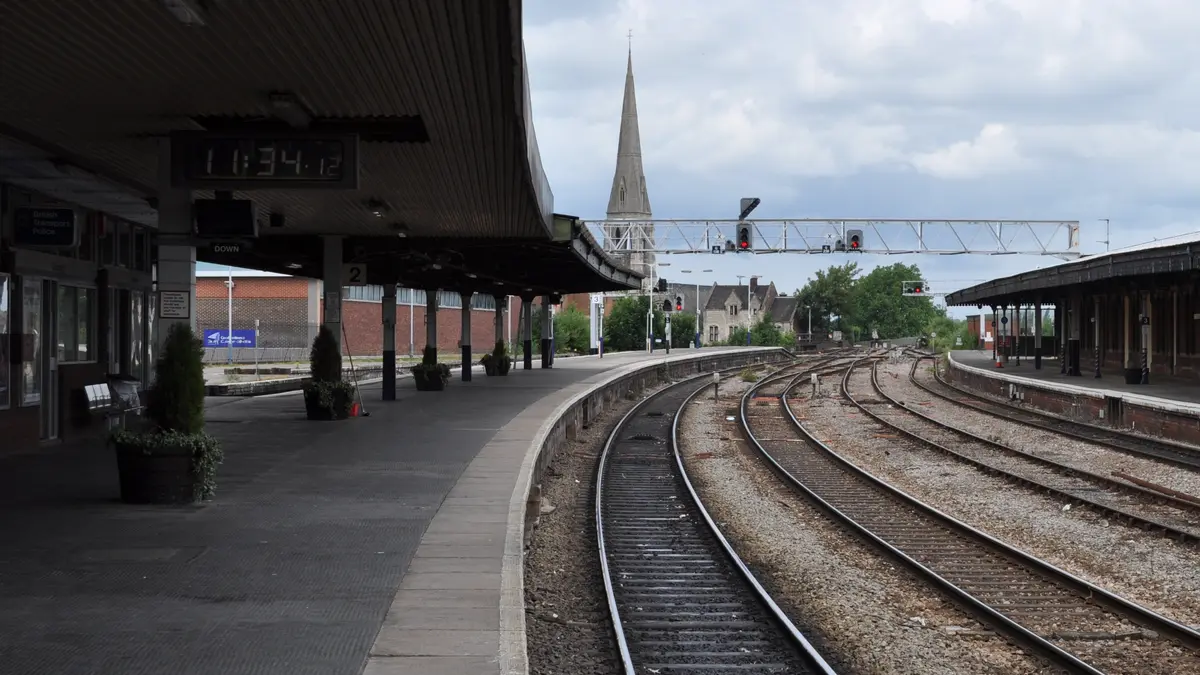
Your next train ride offers a live systems tour. Start on the platform. Notice, for example, the signal gantry, the track layout, and the point blades. Watch how the train approaches, and where it stops. Listen for announcements about platform changes. Each detail reflects a decision made upstream. A signal position reflects braking distance. A platform assignment reflects train length. A departure time reflects junction slots.
- Spot the block: watch signals change as your train clears each section.
- Look for the junction: watch point blades move before a route change.
- Notice the timetable buffer: note recovery time after a slow section.
- Follow the interchange: trace signs from platform to bus stop or ferry pier.
- Watch for the maintenance clue: notice fresh ballast, new rails, or testing trains.
What mix-ups do people make about railways?
Several common ideas mislead travellers. First, people assume a green signal guarantees a clear line to the destination. In other words, a green signal only clears the next block or route section. Drivers, therefore, watch each signal in turn. Second, people assume delays always start with the train they ride. In other words, delays often start elsewhere, and they spread through junctions and platforms. Third, people assume more tracks always mean more trains. In truth, junctions, platforms, and signalling often limit capacity first.
Fourth, people assume electrification alone makes a line fast. In truth, curves, signals, stations, and timetables limit speed too. Fifth, people assume night work means no planning. In truth, night work needs the most planning, since crews must finish before morning services. Sixth, people assume stations only serve trains. In truth, stations serve as interchanges, meeting points, and town gateways. Seventh, people assume high-speed rail means only a fast train. In truth, the train is the visible tip of dedicated lines, in-cab signalling, power supply, braking, and station design working together. Each mix-up fades once readers see the system whole. Track, signalling, timetable, station, power, and maintenance all pull together.
Why does the whole system matter?
A railway succeeds when strangers trust a timetable. That trust rests on invisible work. Engineers, for example, check rails before dawn. Signallers protect blocks through the day. Planners balance competing paths months ahead. Dispatchers adapt plans when events intrude. Station staff guide crowds through peaks. Maintenance teams renew worn parts before failure. No single hero carries the system. The system carries itself through layered checks and shared decisions.
Understanding the system, therefore, changes how you travel. You allow time for connections at busy junctions. Prompt boarding keeps aisles clear. Reading signals, signs, and announcements with context helps too. You also judge disruption with patience. A held train may protect a junction. A skipped stop may rescue a timetable. Knowledge, therefore, turns waiting into understanding. The next time doors open and you step aboard, you will know what made that moment possible.