Axolotl Care Guide: Tank, Water and Feeding Basics Explained
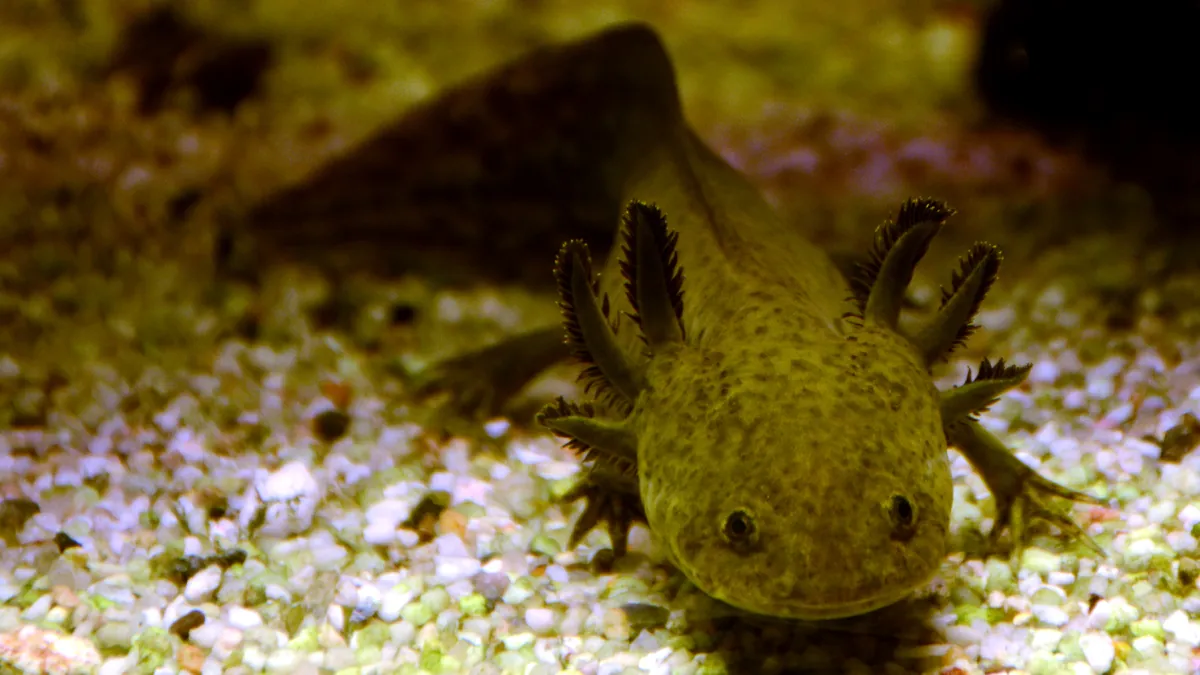
An axolotl looks like a small smiling creature from another world, with feathery gills fanning out from its head and a wide, calm mouth. In fact, it is a fully aquatic salamander from Mexico, and it keeps its larval gills for its whole life. As a result, this axolotl care guide starts with one clear idea: an axolotl is not a fish, and it is not a land pet either. It lives underwater all the time, breathes through gills and skin, and needs cool, clean water to stay healthy. If you want to learn how to care for an axolotl, the tank comes first, the water comes second, and everything else follows from those two choices.
New keepers often buy an axolotl because it looks unusual and seems easy to keep. However, that first impression can mislead. An axolotl produces plenty of waste, reacts badly to warm water, and swallows small stones while feeding. In addition, it can live for well over a decade, so a quick purchase turns into a long promise. Therefore, this guide walks through the basics in plain terms: tank setup, water temperature, water quality, feeding, gills, substrate, lighting, tank mates, handling, behaviour, vet checks, and the common mistakes to avoid. By the end, you should know whether this animal suits your home and your routine.
What Is an Axolotl, and Why Does It Need Such Different Care?
An axolotl is a type of salamander that never grows up in the usual way. Most salamanders lose their gills and move onto land as adults. An axolotl keeps its feathery external gills and its tail fin for life, and it stays in the water. Scientists call this pattern neoteny, which simply means keeping juvenile features into adulthood. Because of it, axolotls are cared for much more like aquarium animals than like typical pet amphibians. They need a cycled filter, steady water chemistry, and a tank they never leave.
That aquatic life shapes every part of their care. First, their skin is soft and permeable, so chemicals in the water pass into their bodies easily. Second, they have no eyelids, so bright light bothers them. Third, they are weak swimmers that walk along the tank floor instead of cruising through open water. As a result, a tall tank with a strong current suits them far less than a long, low tank with gentle flow. Similarly, a heater, a bright lamp, or a bed of small gravel can each cause real harm. In short, the animal rewards keepers who think in terms of cool, calm, clean water.
How Should You Set Up an Axolotl Tank?
A clear axolotl tank setup explained in plain terms comes down to four things: floor space, gentle filtration, hiding places, and a secure lid. Axolotls spend most of their time on the bottom, so the length and width of the tank matter far more than its height. A long tank also holds its temperature and water chemistry more steadily than a small one, which gives you a wider margin for error. In addition, a bigger body of water dilutes waste between changes. For that reason, most care sheets suggest starting with a tank of around 75 litres (about 20 gallons) for one adult, then adding space for each extra animal.
Filtration needs care too. Axolotls produce a surprising amount of waste, so a filter is essential. However, they dislike strong currents, and a powerful outflow can stress them badly. A sponge filter suits many setups well, since it cleans the water without pushing it around. A hang-on-back filter can also work if you baffle its outflow, for example by aiming it at a rock or a piece of decor. Meanwhile, the tank needs a tight-fitting lid. Axolotls can leap when startled, and a gap at the top is an easy escape route. Finally, add at least one hide per animal, such as a cave, a pipe, or a terracotta pot. Hides give the animal a dark retreat, and a shy axolotl with a good hide eats and rests far better than one left in the open.
What Size Tank Does a Single Axolotl Need?
Floor space decides the answer. A single adult axolotl needs a tank with a long base, often described as a 20-gallon long shape. That size gives the animal room to walk, turn, and choose between spots in the tank. It also gives waste somewhere to spread out instead of building up in one corner. If you plan to keep two axolotls together, you need far more floor space again, and the animals must be close in size. Even then, cohabitation brings risks, which this guide covers later. For most first-time keepers, one axolotl in a roomy tank is the simpler and safer start.
What Equipment Belongs in an Axolotl Tank?
The basic kit is short, and each item earns its place. You need a tank with a lid, a gentle filter, a thermometer, a water test kit, a dechlorinator for tap water, hides, and a siphon for cleaning. A thermometer matters more here than in most aquariums, since temperature is the single biggest risk. A test kit matters too, because you cannot judge water quality by looking at it. Clear water can still hold harmful ammonia, while cloudy water may simply be a bacterial bloom. In addition, keep a soft container ready for the rare moments when you must move the animal. A net can scratch delicate skin and snag gills, so keepers generally scoop the animal up in a smooth cup or tub instead.
Why Is Axolotl Water Temperature So Important?
Temperature is the first thing to get right, because heat harms axolotls faster than almost anything else. They come from cool, high-altitude lakes, and their bodies work best in cold water. The axolotl water temperature general guidance from care sheets points to cool water in the mid-teens Celsius, roughly 16 to 18 degrees, with many sources accepting a slightly wider band up to around 20 degrees. Sources disagree a little on the exact numbers, so treat any single figure as a guide rather than a settled fact. What they agree on is the direction: cool is safe, and sustained warmth is dangerous.
Warm water causes a chain of problems. First, it holds less oxygen, so the animal must work harder to breathe. Second, it speeds up the animal’s metabolism while its appetite often falls, which is a poor combination. Third, warm water favours the fungi and bacteria that cause skin problems. As a result, an axolotl in water that stays warm for days may stop eating, curl its gills forward, and produce extra mucus. Unlike tropical fish such as bettas, which need warm water to thrive, axolotls need the opposite. If your room stays warm for much of the year, plan your cooling method before you buy the animal, not after. Our betta fish care guide shows how different the needs of a warm-water fish can be.
How Can You Keep Axolotl Water Cool?
Cooling starts with the room, not the tank. Keep the aquarium away from windows, radiators, and direct sunlight. A shady corner of a cool room often holds a steady temperature on its own. Next, a small fan blowing across the water surface can drop the temperature by a few degrees through evaporation. You will need to top the water up more often, since evaporation removes water but leaves waste behind. In warmer climates, or in a home without steady air conditioning, many keepers use an aquarium chiller. A chiller costs more than a fan, yet it is the only method that holds a set temperature through a hot summer. Frozen water bottles can help in a short emergency, but they swing the temperature up and down, so they are no substitute for a proper plan.
What Are the Axolotl Water Quality Basics?
Clean water matters as much as cool water, because an axolotl breathes through its skin and gills. The axolotl water quality basics are simple to state and need steady habits to maintain. Tap water must be treated first, since chlorine and chloramine in untreated tap water can kill an axolotl quickly. A standard aquarium dechlorinator handles this job. After that, three numbers matter most: ammonia and nitrite should read zero, and nitrate should stay low. Ammonia comes from waste and uneaten food, and even small amounts can burn delicate gill tissue. Like goldfish, axolotls produce a lot of waste for their size, so their water needs more attention than a lightly stocked fish tank. Our goldfish care guide explains the same waste problem in a different species.
Testing is the only way to know where your water stands. A liquid test kit gives clearer readings than paper strips, and it pays for itself quickly. Test the water at least once a week, and more often while a tank is new or after any change. Write the results down, since a short log shows slow drifts that a single reading can hide. For example, nitrate that creeps up week by week tells you to change more water or feed a little less. In addition, keep the water level steady and the temperature stable during every change. A sudden swing in temperature or chemistry stresses the animal more than a small, steady imperfection does.
Why Does an Axolotl Tank Need to Cycle First?
Cycling means growing helpful bacteria in the filter and on surfaces before the animal moves in. These bacteria turn ammonia into nitrite, then turn nitrite into nitrate, which is far less harmful and is removed by water changes. A new tank has almost no bacteria, so ammonia from the first waste can build up fast. That is why keepers run a tank for several weeks with an ammonia source and no animal inside, testing until ammonia and nitrite read zero and nitrate starts to rise. Skipping this step is one of the most common causes of early losses. Patience here saves far more trouble than it costs, and a cycled tank is much easier to look after from day one.
How Often Should You Change the Water?
Most keepers change part of the water every week, usually around a quarter of the tank volume. This routine removes nitrate and waste while keeping the chemistry steady. Take out the old water with a siphon, and use the same tool to lift debris from the floor. Then add fresh water that you have treated with dechlorinator and matched to the tank temperature. Never change all the water at once, since a full change wipes out the stable conditions the bacteria need. In addition, clean the filter media in old tank water, not under a tap, because chlorinated tap water can kill the helpful bacteria living in it. Small, regular changes beat rare, dramatic ones every time.
What Do Axolotls Eat?
Axolotls are carnivores, and they eat by sucking food into their wide mouths. Their staple foods are earthworms and sinking pellets made for carnivorous aquatic animals, with frozen bloodworms, blackworms, and similar foods as variety. Earthworms suit them well, since they are soft, protein-rich, and easy to size by cutting them for a young animal. Pellets offer a handy backup, and many keepers use them for part of the diet. How commercial pellets are produced shapes what ends up in them, and our guide to how pet food is made explains that process in general terms. Whatever you feed, offer food that fits the mouth, since an axolotl cannot chew and must swallow each piece whole.
Feeding technique matters too. Axolotls hunt by movement and smell, so they may ignore food that sits still. Wiggling a worm on blunt feeding tongs often gets a response when a dropped pellet does not. In addition, feed in the same spot each time, so the animal learns where to wait. Remove anything uneaten within half an hour, because rotting food fouls the water fast and pushes ammonia up. Finally, avoid feeder fish as a regular food. Fish can carry parasites, they may nip at gills before they are eaten, and they add little that worms and pellets do not already provide. A simple diet, fed well, beats a fancy one fed carelessly.
How Often Should You Feed an Axolotl?
Young axolotls grow fast and eat often, usually once a day. Adults slow down, and most do well on food every two to three days. Offer only as much as the animal eats in a short session, then stop. A healthy adult has a body about as wide as its head, which is a handy visual check. A body much wider than the head suggests overfeeding, while a narrow body with a visible head ridge suggests too little. Appetite also changes with temperature and season, so watch the animal rather than following a rigid timetable. If an axolotl that usually eats well refuses food for several days, check the water first. Poor water quality and warm temperatures are the most common reasons for a sudden loss of appetite.
How Do Axolotl Gills Work?
The feathery branches on an axolotl’s head are its external gills, and they are the animal’s most striking feature. Axolotl gills explained in simple terms come down to surface area: each branch is covered in fine filaments that pull oxygen from the water. The animal can also breathe through its skin and, in a small way, through its lungs by gulping air at the surface. Gills do most of the work in cool, well-oxygenated water, while skin breathing matters more when the water is warm or still. That is one reason water quality counts so much. Anything that coats or damages the gills, from ammonia to rough handling, cuts the animal’s ability to breathe.
Gills also act as a health gauge. Healthy gills look full, fluffy, and gently fanned, with good colour. Gills that shrink, curl forward, or lose their filaments often point to a water problem, usually warmth or ammonia. A pale or ragged gill edge deserves the same attention. However, gills change slowly, so a daily glance is more useful than a single worried look. Learn what your animal’s gills look like on a good day, and you will notice a bad day much sooner. If the gills look wrong and the water tests show a problem, fix the water first. That step alone resolves many gill worries without any further action.
What Should You Know About Axolotl Substrate Choices?
The floor of the tank deserves real thought, because axolotls feed by suction and can swallow whatever lies beneath their food. Axolotl substrate choices are really a choice between three safe options and one risky one. A bare bottom is the simplest and safest choice, since there is nothing to swallow and waste is easy to siphon away. Fine sand is the next option, and it looks natural while passing harmlessly through the animal if a little is swallowed. Large, smooth stones too big to fit in the mouth are the third option, though they trap waste between them and need thorough cleaning. Small gravel is the risky choice, and most care sheets warn against it, since swallowed stones can block the gut.
Age changes the calculation. Keepers often keep young axolotls on a bare bottom, since small animals swallow substrate more easily and suffer more from a blockage. An adult on fine sand is a common and reasonable setup. Whatever you choose, keep the layer thin and clean it with a siphon during water changes. A deep bed of sand or stones traps waste and can develop stale pockets. In addition, avoid sharp or rough materials entirely. Axolotl skin tears easily, and a rough floor can leave small wounds that invite infection. Smooth, simple, and easy to clean is the rule that serves best.
What Are the Axolotl Lighting Basics?
Axolotls need very little light, and bright light can stress them. The axolotl lighting basics are simple: no special lamp is required, and dim light is better than bright light. These animals have no eyelids, so they cannot shut out glare, and they come from murky lake water where light stays soft. A low, shaded light for viewing is enough, and many keepers run the tank light only for short periods. Room light alone often suffices, especially if the tank sits in a shaded spot. Unlike basking lizards such as bearded dragons, which need strong light and heat to process their food, axolotls ask for the opposite. Our bearded dragon care guide shows how different a sun-loving reptile’s lighting needs can be.
If you keep live plants, they will want some light, so balance the two needs. Choose plants that grow in low light, and place them where the axolotl can still find shade. Floating plants can help, since they soften the light from above and give the animal cover. Avoid placing the tank where sunlight strikes it directly. Sunlight warms the water fast, grows algae on the glass, and leaves the animal with nowhere dim to rest. A tank that looks a little shadowy to human eyes often feels just right to an axolotl. When in doubt, choose the dimmer option and watch how the animal behaves.
Can Axolotls Live With Tank Mates?
The safest answer is that most axolotls do best alone. Axolotl tank mates explained in honest terms come down to a short list of problems. Fish are the most common mistake, since many fish nip at the axolotl’s soft gills, and the axolotl may try to eat any fish small enough to fit in its mouth. Snails cause trouble too, since the axolotl may swallow one and struggle with the shell. Shrimp can work in some setups, yet they often end up as food. Even another axolotl is not a simple choice. Animals of different sizes can injure each other, since a larger axolotl may bite a smaller one, and a male housed with a female may breed constantly, which exhausts the female.
If you do keep two axolotls together, they should be the same size and the same sex where possible, with plenty of floor space and a hide each. Watch them closely in the first weeks, especially at feeding time, when nipping is most likely. Any animal with damaged gills or a bitten tail should be separated at once. In addition, never add a new animal without a quarantine period in a separate tank. A new arrival can carry illness into a healthy setup, and a few weeks of watching apart costs far less than treating a whole tank. For most keepers, one axolotl alone in a good tank is the calmer and kinder choice.
What Are the Axolotl Handling Rules?
The main rule is simple: handle an axolotl as little as possible, and never lift it out of the water. Axolotl handling rules exist because the animal breathes through wet skin and gills, and air exposure dries and damages both. Its skin is also soft and permeable, so oils, soaps, and lotions on human hands can pass into its body. Even clean hands can remove the protective slime layer that guards the skin. That is why keepers move an axolotl only when they must, for example during a tank move or a vet visit, and they do it with a smooth container full of tank water rather than with bare hands.
When a move is unavoidable, wet your hands first if you must touch the animal at all, and support its whole body gently. Never grab it by the tail or the gills, and never use a net, since mesh can tear skin and snag gill filaments. Keep the animal in water throughout, and return it to the tank as quickly as you can. Handling rules differ sharply from land reptiles such as leopard geckos, which tolerate gentle handling once they are used to it. Our leopard gecko care guide covers that contrast in more detail. With an axolotl, the kindest handling is the handling that never happens. Enjoy the animal by watching it, not by holding it.
What Do Axolotl Behaviour Signs Tell You?
Axolotls are quiet animals, yet they still communicate through behaviour. Axolotl behaviour signs are worth learning, since a change in routine often appears before any visible illness. A healthy axolotl rests on the tank floor, walks slowly, and comes out for food with interest. It may also float up to gulp air at the surface now and then, which is normal in small amounts. It will use its hides, explore at dusk, and flick its gills gently as it breathes. These calm patterns are the baseline, and they are what you compare everything else against.
Several signs deserve a closer look. An axolotl that floats and cannot sink may have swallowed air or may be unwell, so check the water and watch it closely. One that stays at the surface, gulps air often, or curls its gills forward may be short of oxygen or stressed by warmth. A sudden loss of appetite, a tail that curls at the tip, or long spells of hiding in a normally active animal are also worth noting. None of these signs gives a diagnosis on its own, and this guide offers no treatment advice for a specific animal. Instead, treat a behaviour change as a prompt: test the water, check the temperature, and look at the whole setup. If the signs persist, an aquatic vet can assess the animal properly.
How Long Do Axolotls Live, and What Does That Commitment Mean?
Axolotls live a long time for a pet of their size. The axolotl lifespan and commitment question starts with a general range: with good care, many live for around a decade, and some live into their mid-teens. Sources vary on the exact figures, so treat those numbers as a broad guide rather than a promise for any single animal. What matters is the shape of the commitment. A pet that lives for ten years or more needs a keeper who can keep the water cool through many summers, test the water every week, and arrange care during holidays and moves. Other long-lived pets, such as tortoises, demand the same kind of forward thinking, and our tortoise care guide describes a commitment that lasts even longer.
That long horizon should shape the decision to buy. First, think about where you will live over the next decade and whether a large tank fits each move. Second, think about who looks after the animal when you travel, since an axolotl cannot simply be left with a bowl of food. Third, think about running costs in general terms: electricity for cooling, filter media, test kits, and food add up over the years. None of this is a reason to avoid the animal. It is a reason to plan before you commit. An axolotl bought on impulse and rehomed a year later is a poor outcome for everyone. An axolotl bought after honest thought can be a calm companion for many years.
When Should an Axolotl See a Vet?
Not every worry needs a vet, yet some do, and knowing the difference matters. Axolotl vet checks general guidance starts with prevention: a new animal benefits from a check with an aquatic or exotic vet soon after arrival, so you have a baseline and a vet who knows your animal. After that, most keepers seek help when a problem does not resolve with better water. Examples include a wound that does not heal, a swollen limb, gills that keep shrinking despite clean cool water, or an animal that stops eating for a long stretch. A vet can examine the animal, test the water with you, and advise on next steps. This guide gives no diagnosis or treatment advice for any specific animal, since that belongs to a vet who can see it.
Finding the right vet takes a little research, since not every small-animal practice treats aquatic amphibians. Ask local exotic practices whether they see axolotls, and ask what experience they have with them. Keep the vet’s number with your test kit, so you are not searching for it in a crisis. Exotic-animal vet care has grown into its own field over the years, and our history of veterinary care traces how that field developed. In addition, keep a short record for each animal: when it arrived, what it eats, how the water tests, and any changes you notice. That record helps a vet far more than a worried description alone.
What Are the Most Common Axolotl Care Mistakes?
Most axolotl problems trace back to a small set of avoidable errors. The axolotl common care mistakes list starts with warm water, which is the single biggest killer in home tanks. Next comes an uncycled tank, where ammonia burns gills before the keeper realises the water is unsafe. Small gravel follows close behind, since it looks natural yet can block the gut when swallowed. Overfeeding is another frequent error, because uneaten food rots fast and pushes ammonia up. Strong filter flow, bright light, and rough handling round out the usual list, and each one stresses an animal that prefers calm, dim, gentle conditions.
The good news is that every item on that list is preventable, and that is the thread running through this axolotl care guide. Check the temperature daily, cycle the tank before the animal arrives, choose a bare bottom or fine sand, feed modestly, baffle the filter, dim the lights, and keep handling to a minimum. If you catch yourself making one of these mistakes, fix the water first and the setup second. Many keepers learn these lessons the hard way, and the animal pays for the lesson. A short checklist on the tank lid can help: temperature, ammonia, nitrite, nitrate, feeding day, and water change day. Six small habits, repeated weekly, prevent most of the trouble this species faces in captivity.
Is an Axolotl the Right Pet?
That question has no single answer, since it depends on your home, your habits, and your patience. The question “is an axolotl the right pet” is really a set of smaller questions. Can you keep water cool through the summer? Can you test water weekly and change part of it every week for years? Are you happy with a pet you watch rather than hold? Do you have an aquatic vet within reach? If the answer to most of those is yes, an axolotl can be a rewarding companion. It is quiet, beautiful in a strange way, and full of small behaviours that reward patient watching. If the answer is no, that is useful knowledge too, and a different pet may suit you better.
An axolotl suits keepers who enjoy routine and detail. It does not suit people who want a pet to cuddle, a pet that thrives on attention, or a pet that forgives a hot room and a missed water change. It also suits homes where the tank can sit in a cool, shaded spot and where someone will be around to look after it during holidays. Before you decide, visit a keeper or an aquarium, watch an axolotl for a while, and read more than one care sheet. A little patience at this stage costs nothing. In the end, the best axolotl keepers are not the ones with the fanciest tanks. They are the ones who keep the water cool, keep it clean, and keep showing up, week after week, for an animal that will share their home for a decade or more.