How Remote and Island Communities Receive Supplies: Ferries, Air Links and Stock Planning Explained
Picture a small island with no bridge and no mainland warehouse down the street. Every loaf, every litre of fuel, and every parcel must cross water or sky first. So how remote island communities receive supplies is a question with a surprisingly layered answer. Ferries, small aircraft, careful timetables, and patient stock planning all play a part, and each piece depends on the others.
This guide explains how island communities get supplies in plain terms. It covers the boats and planes that carry freight. It also covers the shops that turn deliveries into stocked shelves. Then it explains the plans that keep food, fuel, and mail moving when the weather turns. It also looks at what happens when a sailing is cancelled. And it explains why some places stock up months ahead of winter. In short, it follows a single delivery from the mainland all the way to a kitchen table.
Why Are Remote and Island Supply Chains So Different?
A mainland town can reorder stock in the morning and see a lorry by evening. An island community cannot. Instead, every delivery must wait for a boat or a plane, and both depend on weather, tides, and timetables. As a result, remote community supply chains run on longer horizons than mainland ones. Planners think in days and weeks, not hours, and a missed sailing can shift a whole week of plans.
Distance is only part of the story. Small populations matter just as much. A small shop orders in small amounts, yet it still needs the same range of goods as a larger store. Suppliers, in turn, must load small mixed orders onto vessels built for bulk freight. That mix of small demand and long distance shapes every choice that follows. It decides what gets stocked, and it decides how often boats sail.
What Makes Distance Such a Big Factor?
Water is the first barrier, and it changes the cost of every item. A lorry can drive straight to a mainland shop. An island delivery, by contrast, needs a vessel, a crew, and a harbour at each end. Each handover adds time, and each handover adds a chance of delay. Meanwhile, the sea itself sets the pace, because rough water slows vessels and can stop them altogether. In practice, distance in island logistics means time and risk, not only miles on a map.
Why Does Small Scale Change Everything?
A remote shop cannot order a full lorry of one product. It orders a little of many things, and that pattern repeats across the whole community. Suppliers therefore group orders from many small buyers into one sailing, which keeps vessels full and costs shared. Still, the balance is delicate. Order too little, and shelves empty before the next boat. Order too much, and perishables spoil or storage overflows. Serving remote populations logistics must solve this puzzle on every sailing, not just once a year.
How Do Ferries and Cargo Boats Carry Everyday Supplies?
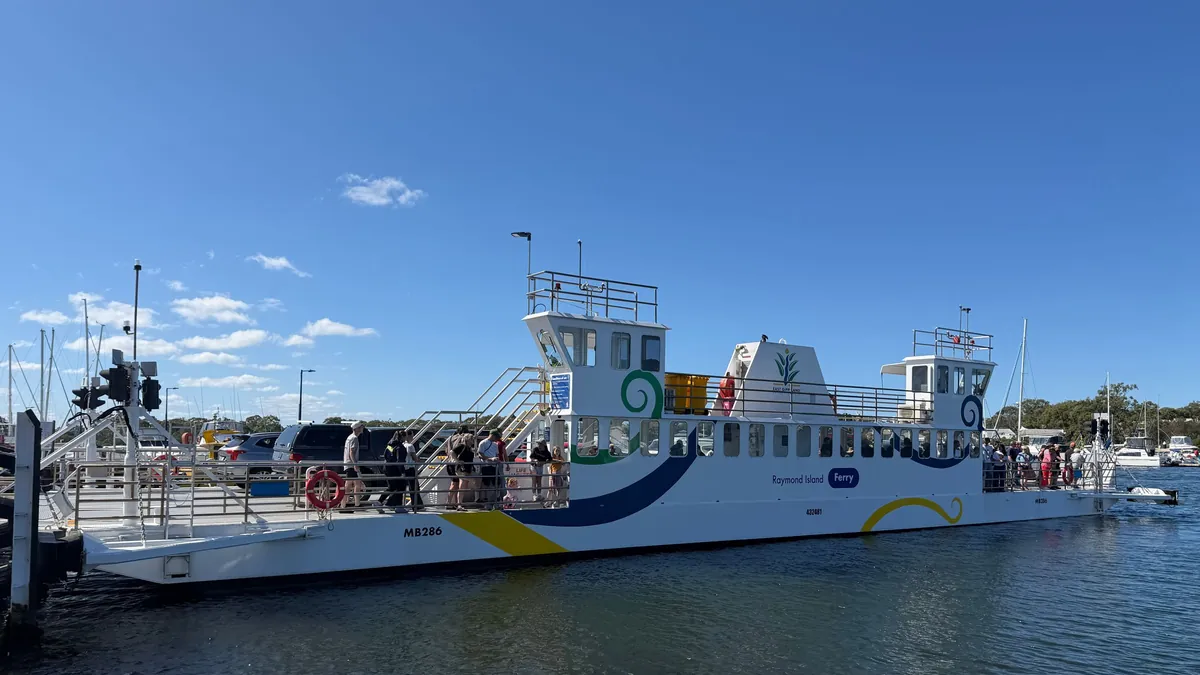
Ferries and cargo boats form the backbone of island supply logistics. They carry the heavy, bulky goods that planes cannot: building materials, vehicles, fuel drums, white goods, and pallets of food. Most island ferries mix passengers and freight on the same sailing. Lorries and vans drive on at one end and off at the other. In addition, dedicated cargo boats handle the loads that need more deck space, such as machinery and bagged goods. Together, the two kinds of vessel keep the flow of goods steady.
Roll-on roll-off ferries suit island routes well, because vehicles can load and unload fast at small harbours. A lorry drives onto a ferry at a mainland port. It then drives straight off at the island quay and on to the shop, with no crane needed in between. That simple design matters where harbours are small and cranes are few. To see the method in detail, read our guide to how roll-on roll-off shipping works. For instance, one full sailing can clear several days of shop orders in a single crossing.
Unloading at a small harbour takes care as well. The quay may hold only one vessel at a time, so lorries roll off in turn and queue on the quayside. Local drivers then carry the loads onward, often over short roads that suit small trucks better than large ones. Where the harbour lacks a crane, everything must roll or lift by hand. That is one more reason roll-on roll-off design fits island routes. In short, the harbour sets the pace of the last mile. A well-run quay can clear a full sailing before the next tide.
What Travels on a Ferry?
Island ferry freight explained in simple terms is the movement of vehicles, pallets, and bulk goods on scheduled ferry crossings. Food comes in chilled and ambient loads, while building supplies travel as bagged cement, timber, and steel. Vehicles arrive the same way, from family cars to farm machinery, and they drive off ready to work. In short, almost anything that fits on a lorry deck can reach an island by ferry. The only limit is whether the sailing can take its weight.
How Do Timetables Shape Island Life?
Ferry timetables set the rhythm of island supply. Shops place orders to match sailing days, and deliveries bunch around arrivals. A weekly sailing, for example, means a weekly delivery cycle, with fresh stock landing on the same day each week. Miss that sailing, and the next chance may sit days away. As a result, timetables do more than move people. They set the pace of trade, and every delay ripples through shops, builders, and households alike.
What Role Do Small Planes and Air Freight Play?
Air freight to remote communities fills the gaps that boats cannot. Planes carry the light, urgent, and perishable goods: fresh produce, chilled food, medicines, spare parts, and mail. A small aircraft can land on a short strip, unload in minutes, and leave again before the weather closes in. That speed makes air the lifeline for goods that spoil fast or cannot wait for the next sailing. Still, planes carry far less than ships. Air freight therefore works as a top-up, not as a replacement for sea freight.
The choice between sea and air is a trade-off. Sea freight suits heavy loads and regular orders, while air suits small loads and urgent needs. Planners split each order by that logic, sending bulk goods by boat and urgent goods by plane. Weather can ground planes for a day, yet it can also halt boats for longer, so neither mode stands alone. In practice, the two modes back each other up. A community with both links is far harder to cut off than one with a single link.
When Does Air Freight Make Sense?
Air freight makes sense when time matters more than volume. Fresh fruit and vegetables, for instance, lose quality with every extra day in transit. A short flight therefore protects them better than a long sea crossing. Spare parts for a broken generator or a water pump follow the same logic. A small part can restart a whole system, so its flight is worth the effort. Mail and small parcels also travel well by air, because they are light and many people wait on them. In short, air earns its place by saving time, not by moving bulk.
How Do Shops on Remote Islands Keep Their Shelves Stocked?
How remote shops are stocked is a story of ordering ahead. Shopkeepers watch sailing days the way mainland shops watch opening hours, and they place orders days before a boat arrives. They order shelf-stable goods in larger amounts, because those goods keep for weeks. Fresh goods, by contrast, arrive in smaller amounts and sell fast, often on the day the boat docks. That split between long-life and short-life stock sits at the heart of remote retail.
Remote community food supplies follow the same pattern on a larger scale. Staples such as rice, flour, tinned goods, and dried foods travel by sea in bulk. They keep well, and they fill a shop for weeks. Fresh produce and dairy travel in smaller chilled loads, often by air or on the fastest sailing, because they spoil quickly. Bread and other daily goods may come from a local bakery where one exists, which cuts the wait for the next boat. To see how chilled goods move in general, read our guide to how fresh food supply chains work.
Stock levels also reflect the calendar. Holiday seasons and local events lift demand, so shops order more ahead of busy weeks. Quiet seasons bring the opposite pattern, with smaller orders and tighter shelves. In both cases, the shopkeeper’s skill lies in matching orders to sailings, not only to customers. A well-judged order lands the day shelves start to thin. A late order, by contrast, leaves gaps that no plane can fill in bulk.
How Does Fuel Reach Places With No Road Connection?
Island fuel deliveries work on the same sea-first logic as food, with one extra layer of care. Fuel arrives by tanker vessel or in drums on a cargo boat, then moves into storage tanks near the harbour. From there, smaller loads go out to filling points, generators, and heating systems across the community. Storage capacity decides how long a community can run between deliveries. Planners therefore size tanks to cover the gap between sailings, with room to spare for bad weather.
Fuel handling stays a system-level job at the harbour, with strict routines and trained staff. Bunded tanks, clear procedures, and regular checks guard against spills and leaks by design, and storage areas sit apart from homes and shops. Our guide to how fuel and energy supplies are moved explains the wider system in more detail. In the meantime, the key point is simple. Planners treat fuel like food, with delivery cycles, storage buffers, and backup plans for missed sailings.
How Are Mail and Parcels Delivered to Remote Areas?
Mail and parcels to remote areas travel on the same boats and planes as everything else. Yet they follow their own sorting chain. Letters and parcels pass through a mainland sorting centre, where staff group them by destination and load them onto the next sailing or flight. At the island end, a local post point sorts them again for collection or delivery. The chain looks simple, but every handover must match the timetable, or a parcel waits for the next boat.
Small parcels suit air freight well, because they are light and quick to load. Larger parcels wait for the ferry, where deck space is cheaper and heavier loads are no problem. Collection points help at the island end, because a single drop can serve many households at once. For the mainland side of that system, see our guide to how parcel lockers and pickup points work. In short, mail moves on the same links as food and fuel, yet it needs its own sorting rhythm to stay reliable.
What Happens When Weather or Breakdowns Interrupt Supplies?
Island supply disruptions explained in plain terms come down to one fact. A single broken link can pause the whole chain. Storms can cancel sailings, fog can ground planes, and a vessel fault can take a boat out of service for days. When that happens, fresh goods run short first, because they keep for the shortest time. Shelf-stable goods last longer, so shops lean on them while they wait for the next sailing. In that sense, a disruption tests the stock plan more than it tests the transport itself.
Recovery follows a set pattern. First, operators reschedule the missed sailing or cover it with the next available vessel. Then, priority loads such as chilled food and medicines move first, while bulk goods follow. Shops, in turn, ration fresh stock and push long-life goods forward until the shelves fill again. Communication matters throughout, because people plan around the news of the next arrival. Overall, a disruption is a delay to manage, not a dead end, as long as the stock buffer holds.
Disruptions also test how well people share news. A cancelled sailing helps no one if the island hears about it late. Operators, shops, and households therefore pass the message along fast. Shops adjust orders, builders shift work to other days, and households plan meals around what is already in stock. That shared picture keeps a short delay from turning into confusion. In the end, the fastest recovery starts with a clear message, not with a faster boat.
How Does Winter Stocking Work in Places That Freeze Over?
Remote community winter stocking is the most demanding part of island supply. In cold regions, sea ice can close routes for weeks, and winter storms can halt sailings for days at a time. Communities therefore build up stocks before the freeze, filling warehouses with shelf-stable food, fuel, and spare parts. The stock must last until the routes reopen, so planners count backwards from the expected thaw. In short, winter turns supply into a race against the calendar.
The pattern echoes the way shipping works in frozen seas, where seasons open and close the routes. Our guide to how Arctic shipping routes work explains that seasonal logic in detail. Back on the islands, winter stocking also covers the small things that are easy to forget. Heating fuel, batteries, light bulbs, and parts for pumps and generators all go into the same early orders. A missing part in midwinter can idle a whole system, so spares get the same care as food. In that sense, winter planning is less about one big delivery and more about hundreds of small ones made early.
How Do Communities Plan Stock So Nothing Runs Out?
Remote stock planning explained in one line is a simple habit. Order early, order in layers, and keep a buffer for surprises. Planners start with the sailing calendar, then work out how much of each good the community uses between sailings. They add a safety margin for bad weather, and they split stock between fast-moving and slow-moving goods. The result is a plan that survives a missed boat, because the buffer covers the gap until the next one.
Good records make the plan work. Staff count every delivery in and every sale out, and the gap between the two shows what to order next. That is the same discipline that keeps any store running. Yet the stakes are higher on an island, because no same-day delivery can fix a wrong count. Our guide to how warehouse stock accuracy is kept covers the counting methods behind the discipline. In practice, a tidy stock record is the cheapest insurance an island shop can buy.
How Do Planners Decide What to Order?
Planners sort goods into three broad groups. Firstly, essentials such as staple foods, fuel, and medicines get the largest buffers, because a gap there hurts most. Secondly, everyday goods such as cleaning products and household items get steady orders that match sailing days. Finally, slow-moving goods such as tools and spare parts get small orders placed well ahead of need. This ABC-style split keeps attention on the goods that matter most, while the rest runs on routine.
What Makes an Island Supply Chain Resilient?
Island supply chain resilience rests on three habits: backup links, buffer stocks, and local production. Backup links mean more than one way in, so a flight or a second vessel can cover a cancelled sailing. Buffer stocks mean shelves that can wait out a delay, because the warehouse holds extra staples. Local production means food, water, and power made on the island itself, which cuts the load on every sailing. Together, the three habits turn a fragile chain into a steady one.
New tools add a fourth habit: flexible last-mile delivery. Small drones, for example, can carry light medical supplies and small parcels to places that boats reach only slowly. They suit short hops and urgent loads, not bulk freight, yet they add a useful extra link when roads are few. Our guide to how drone delivery works explains the method and its limits. In the end, resilience is not one clever fix. It is a set of small backups that add up to a chain that bends without breaking.
Local production softens every delay as well. An island that grows some of its own food and bakes its own bread leans less on each sailing. Fishing close to shore adds another local source. Gardens, small farms, and local workshops cannot replace the ferry, yet they cover the daily essentials when a boat runs late. Over time, that local base also keeps skills and jobs on the island, which matters as much as the goods themselves. In short, resilience grows from what an island can do for itself, not only from what it can import.
How Are Remote Area Deliveries Organised From Start to Finish?
Remote area deliveries explained end to end start with an order on the island. They end with a parcel on a doorstep. A shopkeeper or household places the order with a mainland supplier, who groups it with other orders bound for the same sailing. The goods travel by lorry to the port, load onto the ferry or cargo boat, and cross to the island quay. At the quay, local vehicles collect the loads and carry them to shops, stores, and homes. Each step has a named owner, so a delay at any point has a clear next action.
That chain only works when information moves as fast as the goods. Sailing times, load lists, and arrival news must reach the island before the boat does. Shops, drivers, and stores can then plan the day. When the news is late, lorries wait at the quay and shelves stay empty for hours. Early news, by contrast, lets the whole island plan around the arrival. In short, remote delivery is a communication job as much as a transport job. The best-run chains treat the timetable as shared news, not as a secret.
So the answer to how remote island communities receive supplies is a system, not a single boat. Ferries carry the bulk, planes carry the urgent goods, and shops order ahead. Planners keep buffers for the days when the weather says no. Each piece is simple on its own, yet the pieces only work together. That is the quiet skill behind every stocked shelf on a remote shore. Plan early, share the timetable, and never rely on a single link.