
Life Support in One Plain Idea
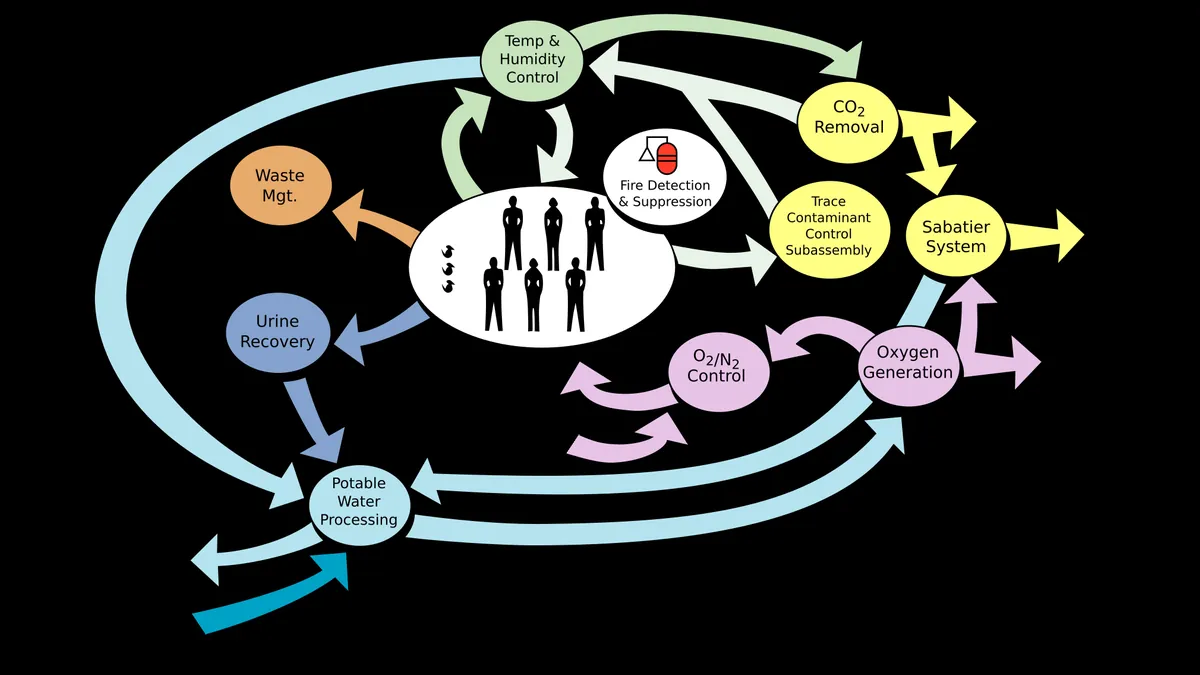
A space station holds people inside a sealed metal home. Outside that home, breathable air cannot reach the crew. Inside, every breath, drink, and meal depends on machines. This article shows how space station life support works as one connected system. Air, water, heat, waste, food, and power all feed into each other.
Think of the station as a small town with no roads in or out. Supplies still arrive from Earth from time to time. However, daily survival cannot wait for the next delivery. Therefore, the station must reuse what it already holds. For example, breath becomes part of the next breath. Similarly, wash water becomes part of the next drink.
Readers who want space station life support explained in plain language often start with oxygen alone. Oxygen matters, and yet oxygen alone cannot keep a crew alive. Temperature, humidity, waste, food, and power shape every other result. In short, life support means the whole loop, not one machine. The sections below follow that loop step by step.
What Counts as Life Support?
Life support covers every job that keeps people alive and able to work. Air supply sits at the centre of that work. Water supply, temperature control, and waste handling sit close beside it. In addition, food, sleep, exercise, and medical care shape health over time. Power runs through all of these jobs, since pumps, fans, and heaters need energy.
Engineers often split the system into smaller parts for design and repair. One part cleans air, while another part cleans water. A third part moves heat, and a fourth part stores waste. However, the parts share flows, and a fault in one part can reach the others. For example, a water fault can limit oxygen production. Similarly, a power fault can slow fans, pumps, and heaters at once.
Space station life support systems explained in this way look less like a single box. They look like a web of pipes, fans, filters, tanks, and sensors. Crew members watch readings, change filters, and fix faults. Ground teams watch the same readings from Earth and offer guidance. Consequently, life support blends machines, people, and careful routines into one daily practice.
How Astronauts Breathe in Space?
People breathe without thinking about air on Earth. Air surrounds us, and wind replaces stale air with fresh air. A sealed cabin removes that natural exchange. Therefore, the station must add oxygen, remove carbon dioxide, and keep air moving. Without steady movement, stale air can gather around a sleeping crew member.
How astronauts breathe in space depends on pressure as much as on oxygen. Lungs need air at a pressure that lets oxygen pass into blood. The cabin holds air near the pressure found at sea level on Earth. Nitrogen fills much of that air, just as nitrogen fills much of the air outside. Oxygen forms a smaller share, and sensors watch that share without pause.
Crew members breathe cabin air directly during normal work inside the station. They wear a suit only when they step outside the sealed cabin.
A suit carries its own small supply of air for work outside. The guide to how a spacesuit carries its own small life support kit explains that small kit in detail.
Inside, fans and ducts do the work of wind. As a result, breathing stays ordinary, even though the setting stays extraordinary.
Air quality also depends on what else floats in cabin air. Skin, clothing, plastics, and equipment all release faint traces of other substances. Filters and chemical beds remove those traces before they build up. In addition, alarms warn the crew when readings move outside safe limits. Crew members can then find the cause, change a filter, or move to another module.
Where Breathing Air Comes From
Space station oxygen explained in simple terms starts with water. An oxygen system splits water into oxygen and hydrogen with electric current. Oxygen flows into cabin air, while hydrogen flows onward to another process. Water for this job comes from the water recovery system. Consequently, air and water share one supply chain from the start.
Stored oxygen also waits in tanks for backup and for busy periods. Tanks add oxygen when crew numbers rise or when machines need service. In addition, chemical canisters can release oxygen in an emergency. These backups matter because oxygen production needs both water and power. If either supply falters, stored oxygen buys time for repair.
Hydrogen from oxygen production does not go to waste in the full loop. A reactor combines hydrogen with carbon dioxide from cabin air. That reaction makes water and methane as products. Water returns to the loop, while methane leaves the station through a vent. As a result, exhaled breath helps make part of the next supply of oxygen.
Sensors keep oxygen within a narrow band, neither too low nor too high. Too little oxygen leaves crew members tired and slow to think. Too much oxygen raises fire risk, since flames spread more readily in oxygen rich air. Therefore, control systems add oxygen in small steps and check the result. Crew members see the readings and can act when a reading looks wrong.
How Carbon Dioxide Leaves the Air
Every breath adds carbon dioxide to cabin air. Crew members exhale carbon dioxide with each breath, all day and all night. Without removal, carbon dioxide would rise and cause headaches and poor judgement. Therefore, carbon dioxide removal runs without pause while people live aboard. Space station carbon dioxide removal explained in plain terms means capture, separation, and reuse or venting.
One method traps carbon dioxide in materials with tiny pores. Air passes through beds of such material, and carbon dioxide sticks while other gases pass through. Heat or low pressure then frees the trapped gas for the next step. Meanwhile, a second bed takes over, so capture never stops. This swap between beds keeps the cabin steady through day and night.
Another method uses liquids or beads that bind carbon dioxide from passing air. Warming or pressure change releases the gas again in concentrated form. Concentrated carbon dioxide can then feed the reactor that makes water. In addition, some carbon dioxide leaves through vents when reuse is not possible. The choice depends on power, water needs, and the state of each machine.
Carbon dioxide removal also links to fire safety and trace gas control. High carbon dioxide levels dull thinking, so alarms watch the trend, not only the present reading. Crew members check filters, beds, and valves during routine maintenance. Engineers on Earth use similar capture ideas. The guide to how carbon capture works on Earth shows the Earth side of that idea. Station systems face tighter limits on mass and power. In short, clean air needs removal, monitoring, and repair in equal measure.
Why Air Filtration Never Stops
Space station air filtration explained in simple terms starts with dust. Skin flakes, fabric fibres, and tiny bits of food drift in weightlessness. Fans pull cabin air through filters that catch these particles. Without filters, dust would coat equipment, irritate eyes, and clog narrow passages. Therefore, particle filters form the first line of defence for lungs and machines alike.
Particle filters alone cannot handle gases and vapours. Charcoal beds trap many trace substances that escape from plastics and equipment. A catalytic unit then breaks down other vapours with heat and a reactive surface. Finally, a chemical bed handles gases that charcoal and heat leave behind. Each stage removes a different kind of unwanted material from the same stream of air.
Microbes add another reason for steady filtration. Warm, humid air can support growth on damp surfaces and inside ducts. Filters catch many airborne microbes, while dry surfaces and clean routines limit growth. Crew members wipe surfaces, manage spills quickly, and watch for damp spots. In addition, air flow design avoids dead corners where moist air can sit still.
Filter changes follow schedules, and sensors warn when flow drops or pressure rises. A clogged filter forces fans to work harder and moves less air. Consequently, a small filter fault can change comfort across a whole module. Crew members keep spare filters close at hand and log each change. As a result, filtration stays routine, visible, and easy to check.
How Moving Air Keeps a Station Safe
Warm air rises on Earth, and cool air sinks in its place. That natural motion, called convection, stirs air in every room. Weightlessness removes that stirring, since warm and cool air no longer separate by weight. Therefore, a station needs fans to push air through every cabin. Without fans, a bubble of stale air can surround a crew member.
Ducts, vents, and fans form a planned path for air through each module. Fresh air enters near work areas, while return air leaves through grilles. Sensors measure flow and temperature along the path. Crew members can feel weak flow as stuffiness or uneven warmth. In addition, equipment racks need their own air flow to carry heat away.
Air movement also protects against pockets of gas near leaks or vents. A leak can release gas into one corner, and still air would let it gather there. Moving air dilutes the gas and carries it toward sensors and filters. Consequently, ventilation serves safety as well as comfort. Designers place sensors where air flow will bring early warning of trouble.
Sleep areas need special care, since a sleeper cannot move away from stale air. Vents near bunks push gentle air across the face and body. Crew members also keep sleep areas clear of loose items that block vents. Similarly, exercise areas need stronger flow, since hard work raises heat and moisture fast. In short, air movement follows people, not only machines.
Where Drinking Water Comes From
Space station water recycling explained in simple terms starts with a hard limit. Carrying all drinking water from Earth would add enormous mass to every supply trip. Therefore, the station reclaims water from sources already aboard. Urine, wash water, and moisture from breath and sweat all return to the system. Each source flows toward treatment, testing, and storage as drinking water.
Humidity condensate forms a large and steady source. Breath, sweat, and cooking add moisture to cabin air. Cold surfaces in the humidity system pull that moisture out as liquid. Pipes carry the liquid toward treatment with other waste water. As a result, the act of breathing helps refill the drinking supply.
Urine recovery adds another major source through careful processing. A unit separates water from urine with heat and low pressure in a spinning chamber. The spinning motion matters, since liquids do not settle in weightlessness. Recovered water then joins other waste water for final treatment. In addition, water from hygiene and washing joins the same stream.
Stored water still plays a vital role beside recycling. Tanks hold clean water for drinking, cooking, and hygiene. Supplies from Earth top up tanks and cover losses from vents and leaks. Crew members ration with care during faults, since every litre counts twice. Once recycling restarts, tanks refill and normal routines return.
How Dirty Water Becomes Drinking Water
Waste water first passes through filters that catch particles and fibres. Pumps move the water slowly, so filters can do their work without tearing. Sensors watch pressure across each filter for signs of clogging. When pressure rises, crew members know that a filter needs attention. Therefore, the journey starts with simple separation before chemical treatment begins.
Next, treatment beds remove dissolved substances that filters cannot catch. Water passes through beds of reactive material in a set order. Each bed targets a different group of dissolved substances. A heated catalytic unit then breaks down remaining vapours and organic material. Heat and a reactive surface turn many unwanted substances into harmless forms.
Testing decides whether treated water can enter storage. Sensors measure electrical conductivity as a fast check on purity. Clean water shows a low reading, while dirty water shows a higher reading. Water that fails the check loops back for more treatment. Water that passes moves into storage tanks for crew use.
Crew members also test stored water with kits and logs during routine checks. Taste, clarity, and smell offer early clues, though sensors give the firm verdict. Hygiene water and drinking water may follow different paths after storage. In addition, water for oxygen production draws from the same clean supply. Consequently, one treatment chain supports drinking, hygiene, and breathing air at once.
Why Humidity Matters as Much as Temperature
Space station humidity explained in simple terms starts with breath. Each breath adds moisture, and sweat adds more during work and exercise. Without control, moisture would fog windows, dampen clothing, and feed microbes. Therefore, humidity control runs beside temperature control in the same air system. Dry enough air protects equipment, while moist enough air protects skin and airways.
Cold plates pull moisture from air as it passes over chilled surfaces. Droplets form on the plates and flow into collection pipes. Fans keep air moving across the plates, so no damp pocket stays hidden. In weightlessness, surface tension and air flow guide droplets where gravity cannot. As a result, water that leaves the body returns as liquid for treatment.
Humidity also shapes comfort during sleep and work. Air that feels too dry irritates noses, throats, and eyes. Air that feels too damp leaves skin clammy and clothing heavy. Crew members report comfort, and controllers adjust settings in small steps. In addition, plants in research racks need their own humidity care, separate from crew cabins.
Condensation on cold walls can hide behind panels and racks. Crew members inspect such spots during cleaning and maintenance rounds. Drying a damp area early prevents stains, smells, and microbial growth. Similarly, spills need fast wiping, since free liquid drifts in weightlessness. In short, humidity control blends machines, housekeeping, and watchful eyes.
How Temperature Stays Comfortable in Extreme Cold and Heat
Space station temperature control explained in simple terms starts with sunlight and shadow. One side of the station may face fierce sunlight, while the other side faces deep cold. Equipment inside adds heat without pause, since electronics warm as they work. Therefore, temperature control must move heat, not only make heat. Cooling matters just as much as heating aboard a sealed station.
Coolant loops carry heat from cabins and racks toward radiators outside. A fluid absorbs heat indoors, flows through pipes, and releases heat at radiator panels. Radiators glow with waste heat into the cold of space. Pumps keep the fluid moving, and valves balance flow between loops. As a result, heat follows a planned path out of the station.
Heaters warm cabins and equipment during cold periods and after shadow passes. Insulation slows heat loss through walls and windows. Shutters and coatings manage sunlight on sensitive surfaces. Crew members wear layers for personal comfort when a module runs cool. In addition, fans spread warm and cool air evenly, so no corner turns into a hot or cold trap.
Sensors watch cabin temperature, rack temperature, and coolant temperature together. A rise in one rack can warn of a fan fault or a blocked vent. Controllers adjust pumps, valves, and heaters in response to readings. Crew members check vents and clear items that block air flow. Consequently, comfort depends on moving heat, moving air, and watching trends.
What Crew Members Eat, and Why Food Counts as Life Support
Space station food explained in simple terms starts with storage. Most food arrives sealed, dried, or frozen in sturdy packaging. Sealed packs protect food from air, moisture, and floating crumbs. Crew members rehydrate many dishes with hot or cold water. The water link means food routines draw on the same recycled supply as drinking.
Menus balance energy, protein, salt, and variety across long stays. Variety matters for morale as much as for nutrition, since the same meal soon turns dull. Crew members trade packs, share treats, and mark favourite dishes. Ground teams plan menus with crew tastes and health needs in mind. In addition, fresh food from supply trips offers a welcome change when it arrives.
Eating in weightlessness needs care with crumbs, drops, and floating pieces. Crew members eat at tables with restraints, straps, and covered containers. Spoons, forks, and scissors stay tethered or tucked away after use. A loose crumb can drift into an eye, a vent, or a sensitive instrument. Therefore, mealtime routines protect both people and machines.
Food waste joins the wider waste system after each meal. Packaging folds flat for storage, while scraps go into sealed bags. Crew members clean tables and tools before crumbs drift away. Water used for washing dishes returns to treatment where possible. As a result, food, water, and waste stay linked through every meal of the day.
Where Waste Goes When Nothing Can Be Thrown Away
Space station waste explained in simple terms starts with a toilet that uses air flow. Flushing with water would waste a precious supply and fail in weightlessness. Instead, flowing air draws waste into a sealed container. A funnel and a seat with a seal guide liquid waste, while solid waste enters a separate bag. Fans, seals, and careful aim replace gravity and water.
Liquid waste flows toward recovery, since its water can return to the loop. Solid waste goes into bags that seal tightly and store safely. Crew members label bags, compact them, and stow them in set places. Some waste returns to Earth on supply craft for study and disposal. Other waste leaves in craft that burn up safely far from people.
Hygiene waste needs the same care as toilet waste. Wipes, towels, and packaging can block filters if they drift loose. Crew members bag such items at once and store them in closed bins. Cleaning routines keep surfaces free of spills and residues. In addition, gloves and bags protect crew members during handling and changes.
Waste handling also protects air quality, since waste releases gases as it sits. Sealed storage limits smells and keeps trace gases low. Filters and charcoal beds handle the faint traces that still escape. Crew members watch for leaks, tears, and odours during daily rounds. Consequently, waste work stays quiet, routine, and tightly sealed.
How Power Holds the Whole System Together
Space station power explained in simple terms starts with sunlight. Large solar arrays catch sunlight and turn it into electric current. That current runs fans, pumps, heaters, lights, and research equipment. Power also splits water for oxygen and drives the pumps that clean water. Without power, every other life support job slows or stops.
Batteries store energy for passes through shadow, when sunlight cannot reach the arrays. The station moves in and out of shadow as it circles Earth. Batteries charge in sunlight and discharge in shadow without a break in supply. Controllers balance charging, use, and storage across the whole station. As a result, lights and fans stay steady through each shadow pass.
Power distribution follows priority when supply runs short. Life support loads rank above research loads, since breathing and water come first. Controllers can shed lower priority loads to protect vital systems. Crew members learn which switches matter and which loads can wait. In addition, spare parts and bypass routes let power reach vital loads by another path.
Future power ideas may change how stations store and share energy. Research into new battery designs continues on Earth and in orbit. One direction appears in how solid-state batteries store energy in a different form. Fusion research offers another distant hope, described in how fusion energy might one day change power in space. Machines far from home face similar heat and power limits. One example appears in how rovers manage power and heat far from home. For now, sunlight, batteries, and careful priorities carry the load.
How Exercise Protects Bodies in Weightlessness
Space station exercise explained in simple terms starts with load. Bones and muscles stay strong on Earth because gravity loads them all day. Weightlessness removes that load, so bodies adapt by losing bone and muscle. Exercise adds load back with straps, springs, and resistance. Crew members follow daily routines that load legs, back, and arms.
A treadmill with straps lets crew members run while held against a belt. A cycle device works legs without impact, while resistance devices work many muscle groups. Each session raises heart rate, breathing, and sweat. Air flow must rise nearby, since heat and moisture climb fast. In addition, water needs rise, since sweat leaves the body as moisture for recovery.
Exercise also protects mood, sleep, and focus during long stays. Movement breaks the monotony of cabin routines and offers a clear daily goal. Crew members track sessions, adjust loads, and share tips. Medical teams watch trends and adjust routines for each person. Consequently, exercise counts as life support, not only as fitness.
Equipment care matters, since exercise machines vibrate and wear with use. Crew members inspect straps, belts, and joints before sessions. Lubrication, cleaning, and part changes keep machines safe and quiet. A broken treadmill still leaves other options, since routines use more than one device. In short, bodies and machines both need steady care.
Why Backup Systems Matter More Than Any Single Machine
Space station life support redundancy explained in simple terms starts with spare capacity. Vital jobs need more than one way to succeed. A second filter, a second pump, or a second oxygen source waits ready. If one unit fails, another takes over while repair begins. Redundancy turns a sudden fault into a manageable task.
Spares aboard the station cover filters, valves, seals, pumps, and sensors. Crew members train to swap parts with simple tools in cramped spaces. Labels, diagrams, and ground guidance help each swap succeed. In addition, some systems can run at lower capacity while awaiting a spare from Earth. Controllers plan such degraded operation in advance, not in panic.
Manual fallbacks add another layer when automatic control fails. Chemical canisters can scrub carbon dioxide without power for a time. Hand pumps and manual valves can move fluids when electric pumps stop. Crew members drill these fallbacks so actions stay calm and familiar. Similarly, isolation valves let crew members seal a faulty module and keep the rest safe.
Safe haven planning ties redundancy together across the whole station. One module can shelter the crew while another module vents or cools. Stored air, water, and food in the shelter cover the wait. Communication with ground teams guides each decision during the wait. As a result, redundancy means parts, people, plans, and places, not only duplicate machines.
How the Parts Work as One Closed System
Follow one breath through the station to see the loop at work. Lungs take oxygen from cabin air and return carbon dioxide. Fans carry that air toward filters, charcoal beds, and carbon dioxide capture beds. Space station air filtration explained through this journey shows cleaning before capture. Space station carbon dioxide removal explained through the same journey shows capture before reuse. Cleaned air returns to the cabin, while captured gas moves toward water making.
Follow one drink through the same loop for the water side. A crew member drinks clean water and later returns moisture through breath and sweat. Humidity plates collect that moisture, and treatment turns it back into drinking water. Space station water recycling explained through this journey shows loss turned into supply. Space station humidity explained through the same journey shows moisture as a resource, not only as damp air.
Follow heat and power through the loop for the energy side. Sunlight charges batteries and runs fans, pumps, and heaters. Pumps move coolant, fans move air, and heaters balance cold corners. Space station temperature control explained through this journey shows heat moved, not merely made. Through the same journey, space station power explained in this way shows energy as the thread that joins every job.
Space station oxygen explained through the full loop returns to water once more. The reactor makes water from captured carbon dioxide and hydrogen. Electrolysis splits that water and returns oxygen to cabin air. Space station life support systems explained as one loop therefore show air feeding water and water feeding air. How space station life support works becomes clear only when each flow meets the next.
Why Does the Whole Loop Matter More Than Any Single Part?
A single machine can impress, and yet a single machine cannot sustain a crew. Oxygen without filtration leaves trace gases to build up. Water without power leaves pumps and heaters still. Food without waste handling leaves crumbs and smells to spread. Therefore, each job protects the next job. Space station life support explained as a loop teaches that lesson well.
Daily life aboard a station shows the loop in small routines. Crew members check readings, change filters, wipe surfaces, and log water use. They eat together and report small faults early. Space station food explained through daily routines shows meals as fuel and waste in one act. Through the same routines, space station waste explained in this way shows sealing, labelling, and storage as quiet safety work. Space station exercise explained through daily routines shows load, sweat, and recovery as part of the same cycle.
How astronauts breathe in space stays ordinary only because the loop stays steady. Fans stir air, beds capture gas, and tanks hold reserve oxygen. Space station life support redundancy explained through daily routines shows backups as habits, not only as hardware. Drills, spares, and checklists keep those backups ready. Ground teams also watch trends and warn crews before small faults grow.
Future habitats may add plants to close the loop. Plants can take carbon dioxide, release oxygen, and offer fresh food. Such systems still need machines for backup, control, and safety. Station lessons will shape how a lunar habitat might reuse the same ideas. Supplies will still arrive by rocket, as shown in how rockets reach orbit. Stations will still need how a station stays in orbit without falling to Earth. In short, picture a sealed home where air, water, heat, waste, food, and power travel in one circle.