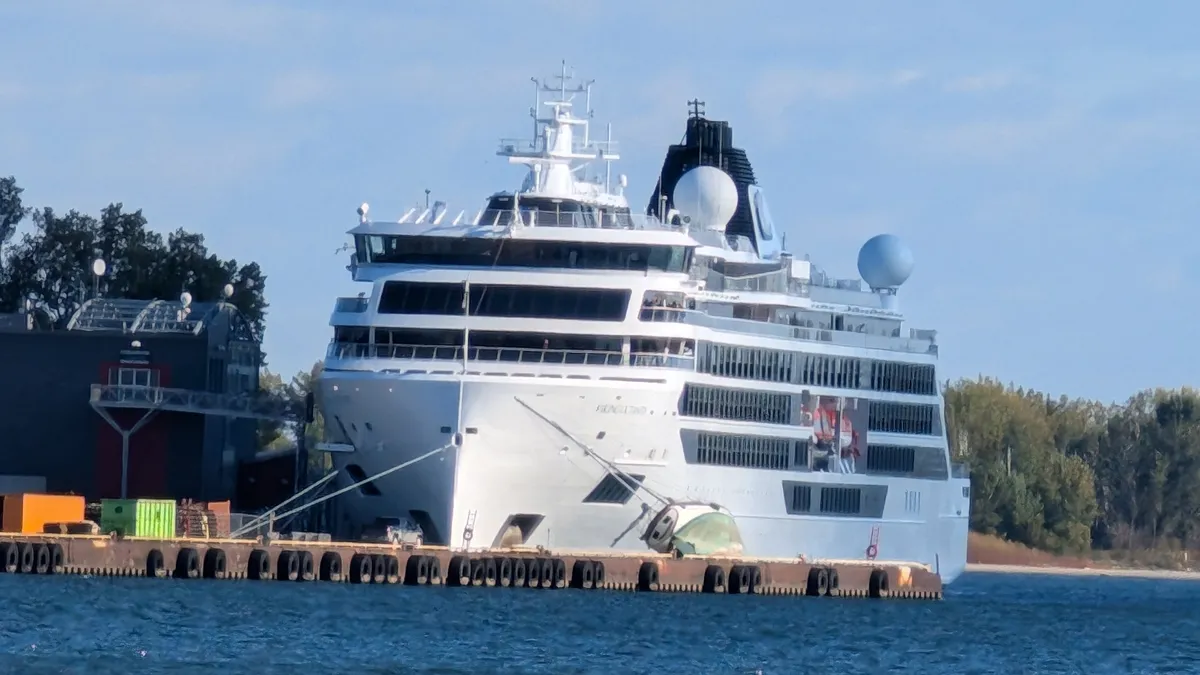
A cruise ship looks simple from the shore. Firstly, a white hull slides past. Secondly, rows of balconies catch the light. Finally, the ship turns toward open water and grows small. However, that calm picture hides a busy system. A cruise ship works as a hotel, a kitchen, a power station, a navigation centre, and a small town at the same time. Consequently, many teams must act together for every sailing to run smoothly.
This guide explains how cruise ships work in plain terms. It follows one sailing from the terminal to the return to port. In addition, it looks inside the ship at decks, cabins, crews, engines, dining rooms, and safety systems. Similarly, it explains how planners choose routes and port stops. Therefore, readers can picture the whole operation, rather than one deck or one meal in isolation.
The short answer helps frame the rest. A cruise ship carries travellers between ports on a planned route. Meanwhile, crews provide rooms, food, activities, medical support, and navigation. The ship also handles fuel, fresh water, waste, and supplies at sea. In contrast, a ferry mainly moves people and vehicles from one shore to another. A cruise ship, however, makes the voyage itself the main experience.
What Makes a Cruise Ship Different From Other Passenger Ships?
Size alone does not define a cruise ship. Instead, purpose defines it. Designers build a cruise ship around stays on board. Therefore, cabins, dining rooms, lounges, pools, theatres, and open decks fill much of the space. Ferries, in contrast, often give more space to vehicle decks and quick boarding. For example, a ferry trip may last a short crossing. A cruise sailing, however, may last several nights with sea days between ports.
How ferry systems work shows the contrast clearly. Ferry crews focus on fast loading, vehicle safety, and frequent turnarounds. Cruise crews, meanwhile, focus on longer stays, varied meals, and daily activities. Similarly, cruise terminals handle luggage, cabins, and passenger checks in a slower sequence. As a result, embarkation feels closer to checking into a hotel than catching a short crossing.
Another difference sits below deck. Cruise ships carry large kitchens, laundry rooms, storage areas, and workshops. In addition, they carry systems for power, water, heating, cooling, and waste. Engineers, cooks, cleaners, entertainers, and medical staff all live on board. Consequently, the ship must support both guests and a large working crew for days at a time. That dual role shapes almost every design choice on board.
How Does a Cruise Sailing Unfold From Start to Finish?
A sailing follows a clear rhythm. Firstly, travellers arrive at the terminal with documents and luggage. Secondly, staff check documents, assign cabins, and load bags. Thirdly, guests board, find cabins, and attend a safety drill. Finally, the ship leaves port and follows its planned route. Each stage has its own team, checks, and timing. Therefore, a delay at one stage can affect later stages.
Sea days and port days then alternate. On a sea day, the ship sails between ports. Guests use pools, dining rooms, shows, classes, and open decks. On a port day, the ship docks or anchors near shore. Guests go ashore for visits, tours, or free time. Meanwhile, crews restock supplies, clean cabins, and prepare for the next leg. As a result, the ship never truly pauses, even while guests sleep.
What Happens During the Embarkation Process?
The embarkation process explained here starts before boarding. Travellers usually receive cabin details, boarding times, and document guidance in advance. At the terminal, staff check identity documents and travel details. In addition, security staff screen luggage and carry-on bags. Crews then tag checked luggage and send it to the correct cabin area. Therefore, guests often reach their cabins before their bags arrive.
Boarding itself follows an order. Staff may call groups in turn, rather than letting everyone crowd the gangway. Families, guests who need assistance, and early groups often board in separate waves. Meanwhile, crew members direct foot traffic and answer questions. How airports work offers a useful comparison, since both terminals manage queues, checks, and gate-style boarding. However, cruise terminals move luggage through different routes than airports use.
Once on board, guests find cabins, explore key decks, and learn muster-station details. Staff also run a safety drill before departure or soon after sailing. In addition, crews count guests and check cabin lists. Finally, the gangway closes, lines release, and the ship moves away from the quay. That moment marks the shift from terminal work to sea work.
How Does a Ship Leave Port and Settle Into Its Routine?
Departure needs care and teamwork. The bridge team plans the exit route, checks tides and traffic, and talks with port pilots where pilots assist. Tug boats may help in tight harbours. Meanwhile, deck crews handle lines, anchors, and gangways. Engineers keep engines ready for slow manoeuvres. As a result, the ship leaves at a controlled pace, rather than rushing into open water.
Once clear of the harbour, the ship builds speed for the next leg. The bridge team sets a course and a schedule. Engineers watch fuel use, engine load, and speed. Meanwhile, hotel teams open dining rooms, bars, and activity spaces. Housekeeping teams finish cabin checks. Consequently, guests often notice little change, apart from the shoreline slipping away.
Daily routines soon take shape. A daily programme lists meals, shows, classes, and port times. Guests choose how busy or restful each day feels. Crews, in contrast, follow shift patterns around the clock. For example, kitchen teams start early, while entertainment teams work late. Therefore, the ship runs on overlapping shifts, rather than one shared working day.
How Are Decks and Cabins Organised on a Cruise Ship?
Decks stack functions in layers. Lower decks often hold engines, storage, laundry, and crew areas. Middle decks hold cabins, dining rooms, and service areas. Upper decks hold pools, lounges, theatres, and open walking areas. However, layouts vary by ship size and design. Therefore, guests should check deck plans for each ship, rather than assume one layout fits all.
This section offers cruise ship decks explained in plain terms. Think of each deck as a floor with a job. One deck may focus on dining. Another deck may focus on cabins. A third deck may focus on pools and sun areas. Meanwhile, lifts, stairs, and corridors link the decks. Signage, deck plans, and crew directions help guests find their way. In addition, many ships use colour codes or themed names for deck areas.
What Do Guests Find on Each Main Deck Area?
Public decks form the social heart of the ship. Main dining rooms often sit on lower public decks. Lounges, bars, shops, and theatres may sit nearby. Meanwhile, pool decks sit higher, where sunlight and sea views shape the space. Promenade decks give guests a walking loop with sea views. Consequently, guests can move between quiet corners and lively areas without leaving the ship.
Service decks stay mostly out of sight. Galleys sit near dining rooms, so staff can move food quickly. Laundry rooms handle bedding, towels, and uniforms. Storage rooms hold food, drinks, and supplies for several days. In addition, workshops support repairs at sea. Therefore, a calm dining room often depends on busy rooms one deck below it.
Cabin decks need quiet and order. Corridors run long and straight, with cabin doors on both sides. Housekeeping carts, linen stores, and service pantries sit at intervals. Meanwhile, crew cabins often sit on lower decks or in separate areas. As a result, guest corridors stay calm, while service traffic uses other routes where possible.
What Types of Cabins Do Cruise Ships Offer?
This section offers cruise ship cabins explained without sales language. Cabins differ mainly in size, view, and location. Inside cabins sit away from the hull and lack windows. Ocean-view cabins add a window or porthole. Balcony cabins add private outdoor space. Suites add more room and separate living areas. However, all cabin types share core features, such as beds, storage, a bathroom, and climate controls.
Location matters as much as cabin type. Midship cabins often feel steadier in rough seas. Higher decks shorten walks to pools and lounges. Lower decks shorten walks to dining rooms on some ships. Meanwhile, cabins near lifts suit guests who prefer short walks. In contrast, cabins at the far ends suit guests who prefer quiet corridors. Therefore, location choices reflect habits, rather than one best spot for everyone.
Cabin design must solve a puzzle. Designers fit beds, wardrobes, desks, bathrooms, and storage into a compact space. In addition, they must leave room for safety equipment and crew access. Beds may convert into sofas during the day. Storage hides under beds and behind panels. Consequently, cabins feel larger than their floor area suggests, when designers use every corner well.
Who Keeps a Cruise Ship Running?
Many roles work together on a cruise ship. Bridge officers steer the ship and manage navigation. Engineers run engines, power, water, and repairs. Deck crews handle lines, tenders, lifeboats, and outdoor maintenance. Hotel teams run cabins, dining, bars, shops, and activities. Medical teams handle health checks and minor treatment. Meanwhile, entertainment teams run shows, classes, and events. Therefore, no single team can run a sailing alone.
Leaders coordinate these teams through daily meetings and shared plans. The captain holds overall command. Department heads report on safety, supplies, schedules, and guest needs. In addition, crews follow drills, checklists, and safety rules. As a result, routine work and emergency readiness share the same structure. That structure matters most when weather, delays, or medical needs change the plan.
What Are the Main Cruise Ship Crew Roles?
This section covers cruise ship crew roles in broad groups. Bridge teams handle navigation, lookout duties, and radio contact. Engineering teams handle engines, electrical systems, plumbing, and air systems. Deck teams handle mooring, tenders, safety gear, and deck upkeep. Hotel teams handle reception, housekeeping, dining, bars, and shops. Activity teams handle fitness, youth programmes, shows, and lectures. Meanwhile, medical teams handle clinics and health advice.
Each role needs different training. Bridge and engineering officers train in maritime skills and safety systems. Cooks train in large-scale catering and food safety. Housekeeping teams learn cabin turnover routines and hygiene rules. Entertainers rehearse shows and learn safety duties as well. In addition, many crew members train in first aid and emergency roles. Consequently, a singer or dancer may also hold a safety post during a drill.
Crews often come from many countries and speak several languages. Ships use one working language for safety orders and daily briefings. Meanwhile, guest-facing teams may speak extra languages for service. Menus, signs, and announcements often use more than one language. Therefore, clear and simple wording matters, especially during safety drills and port days.
What Is Life on a Cruise Ship for Crew Like?
Life on a cruise ship for crew differs sharply from guest life. Crew members work long shifts across many days. They sleep in shared or small cabins on lower decks. They eat in crew dining areas at set times. Meanwhile, they follow strict rules on rest, safety, and conduct. In addition, they may spend weeks or months away from home. Therefore, crew life needs discipline, routine, and strong teamwork.
Free time on board stays limited and structured. Crews may use gyms, lounges, or crew decks during off-duty hours. Shore leave depends on duties, port times, and staffing needs. For example, a crew member may go ashore on one port day and work through the next. Similarly, internet access and phone use follow ship rules and signal limits. As a result, crews plan rest and contact with home around work patterns.
Contracts shape crew life as well. Crew members sign for a set period, with leave between contracts. Training, medical checks, and safety drills fill much of the early days. Meanwhile, senior crew members mentor newer staff. Consequently, experience builds across sailings, and teams learn each ship in detail. Guests may notice that steady teamwork in the calm routines on board.
How Do Cruise Ships Move, Steer and Stay Steady?
Movement starts with power, steering, and control. Engines generate power for propulsion and hotel needs. Propellers or podded drives push the ship through water. Rudders or pods steer the ship. Meanwhile, the bridge team sets speed and course. Engineers monitor load, fuel, and system health. Therefore, movement and comfort depend on the same power system.
Ships also need stability. Designers shape hulls to resist rolling. Ballast systems adjust weight and trim. Stabilisers reduce roll in waves. In addition, crews adjust speed and course for sea conditions. As a result, most sailings feel steady, even though the sea keeps moving. However, rough weather can still cause motion, and crews warn guests in advance.
How Are Cruise Ships Powered?
The question of how cruise ships are powered has a layered answer. Engines burn fuel to drive generators. Generators produce electricity for the whole ship. Electric motors then drive propellers or pods. Meanwhile, the same electricity runs lights, kitchens, lifts, air systems, and water systems. Consequently, engineers treat power as one shared resource, rather than separate systems for moving and living.
Fuel and energy planning starts before departure. Engineers estimate needs for each leg, based on distance, speed, and weather. They also plan reserves for delays and port manoeuvres. In addition, crews monitor consumption during the sailing. For example, slower speeds often cut fuel use, while higher speeds raise it sharply. Therefore, bridge and engineering teams agree speeds that balance schedules and fuel use.
Newer ships use varied fuel and power setups. Some ships use cleaner fuels or hybrid systems. Others add shore power links in port, so engines can rest while docked. Meanwhile, designers improve hull shapes and propellers for efficiency. However, setups vary widely by ship age, size, and route. Travellers should check ship details for each vessel, rather than assume all ships share one system.
How Does Cruise Ship Navigation Work?
This section offers cruise ship navigation explained in simple steps. Firstly, planners set waypoints for each leg. Secondly, bridge teams load the route into navigation systems. Thirdly, officers watch position, speed, traffic, and weather. Finally, officers adjust course when conditions change. Radar, satellite positioning, charts, and lookout watches all feed into those decisions. Therefore, navigation blends instruments with human judgement.
Bridge teams follow strict watch patterns. Officers hand over watches with clear briefings. They log positions, weather, traffic, and decisions. Meanwhile, lookouts watch for small craft, debris, and hazards. Radio teams stay in contact with port control and nearby ships. In addition, pilots may board for harbour entries and exits. As a result, several people check each key decision, rather than one person acting alone.
Weather shapes navigation every day. Bridge teams receive forecasts, wave data, and storm tracks. They may alter course to avoid rough seas. They may also adjust arrival times for port safety. Meanwhile, guest teams share updates and adjust activity plans. Consequently, a route change often protects comfort and safety, rather than signalling a problem with the ship.
How Do Cruise Ship Stabilisers Work?
Cruise ship stabilisers explained simply means fins that fight roll. Fins extend from the hull below the waterline. Sensors detect roll as waves push the ship. Control systems then angle the fins to create lift. That lift opposes the rolling motion. Meanwhile, the hull shape and ballast also resist roll. Therefore, stabilisers form one part of a wider stability system.
Stabilisers work best at cruising speed. At low speed or in port, fins create less lift. Crews then rely more on hull design and ballast. In addition, bridge teams may choose a course that meets waves at a kinder angle. For example, a slight course change can ease rolling without adding much distance. As a result, comfort often improves through small steering choices, as well as through fins.
Guests can help themselves in rough seas too. Staff advise guests to hold rails, sit low, and avoid sudden moves. Cabin teams secure loose items. Dining teams adjust service for safety. Meanwhile, medical teams prepare for motion discomfort. Therefore, stabilisers reduce motion, while crew habits and guest care handle the motion that remains.
How Does Cruise Itinerary Planning Work?
Itinerary planning links ships, ports, seasons, and guest demand. Planners choose a home port for embarkation. They then choose port stops that fit sailing times. They also allow time for docking, visits, and return legs. Meanwhile, they check port depth, berth size, and local rules. Consequently, a route that looks simple on a map may need careful timing at sea.
Seasons shape many choices. Warm-weather routes suit certain months. Cooler routes suit other months. In addition, planners watch school holidays, festivals, and local events. How travel seasons and peak periods work explains that wider pattern. Cruise planners apply the same logic to ships. Therefore, the same ship may follow different routes across the year.
What Shapes Cruise Itinerary Planning?
Cruise itinerary planning balances distance, time, and port capacity. Planners measure sailing time between ports at realistic speeds. They add buffer time for weather and port delays. They also check how many ships can berth at each port. Meanwhile, they plan fuel, supplies, and crew rest around the route. As a result, tight routes leave little room for delays, while looser routes allow more flexibility.
Guest experience also shapes planning. Planners mix sea days with port days. Sea days let guests use ship facilities. Port days let guests explore ashore. In addition, planners vary port types across a sailing. For example, a route may mix busy cities, small towns, and island stops. Therefore, guests gain variety without constant rushing.
Local rules and port needs add further limits. Ports set arrival windows, berth rules, and tender limits. Some ports need tender boats to carry guests ashore. Others allow direct docking at the quay. Meanwhile, customs and immigration checks may add time at some stops. Consequently, planners work with port teams well before the sailing starts.
What Are Cruise Ship Ports of Call?
Cruise ship ports of call are scheduled stops between embarkation and final arrival. A ship may dock at a quay or anchor offshore. Guests then go ashore for a set number of hours. Meanwhile, crews handle supplies, waste, fuel, and cleaning. Port teams manage gangways, tenders, and local transport. Therefore, a port call blends guest visits with essential ship work.
How port authorities work helps explain the shore side of each stop. Port authorities manage berths, safety, traffic, and local services. Cruise teams coordinate arrival times, berth assignments, and security checks with them. In addition, local tour operators, transport providers, and shops prepare for guest arrivals. As a result, a smooth port day depends on shore teams as much as ship teams.
Guests should treat port times as firm. Ships set an all-aboard time before departure. Staff repeat that time in announcements and daily programmes. Meanwhile, guests should allow extra time for queues, tenders, and return trips. For example, tender boats run on a cycle, and queues can grow at peak times. Therefore, early returns beat last-minute rushes, especially on tender ports.
Why Do Itineraries Change?
Itineraries change for safety, weather, and port reasons. Storms may close a port or roughen a route. Port congestion may delay berthing. Mechanical checks may need extra time. Meanwhile, local events or closures may alter shore plans. In such cases, bridge and shore teams agree a revised plan. Guest teams then share updates and adjust tours and timings.
Changes can disappoint guests, yet safety leads every choice. A missed port may mean an extra sea day. A swapped port may mean a different shore visit. In addition, crews may adjust dining, shows, and activities for the new plan. Therefore, flexible packing and open plans help guests enjoy revised routes. Travel insurance and booking terms vary, so guests should read them before sailing.
How Do Dining, Safety and Waste Systems Work on Board?
Three systems define daily life at sea. Dining teams feed large numbers of guests at set times. Safety teams prepare for drills, musters, and emergencies. Waste teams handle rubbish, water, and recycling. Each system runs on strict routines. In addition, each system links to the others. For example, galley waste flows into waste systems, while safety rules shape dining layouts. Therefore, guests see calm service, while crews manage tight systems behind it.
How Do Cruise Dining Systems Work?
Cruise dining systems cover main dining rooms, casual venues, bars, and room service. Main dining rooms often run set sittings or flexible timings. Casual venues serve lighter meals through the day. Meanwhile, galleys prepare food in large batches with strict timing. Chefs plan menus for each day, based on supplies and guest numbers. Consequently, food service needs precise counts, storage, and preparation.
Supply planning starts on shore. Teams order food for the full sailing, plus reserves. Cold stores hold fresh, chilled, and frozen goods. Crews rotate stock and check temperatures. In addition, galley teams follow hygiene rules for handling, cooking, and serving. Special dietary needs need advance notice, so kitchens can plan safe meals. Therefore, guests with dietary needs should share details early and confirm them on board.
Service styles vary by venue. Main dining rooms use table service with courses. Buffet venues let guests serve themselves at stations. Bars serve drinks and light snacks. Meanwhile, room service brings meals to cabins at set hours. As a result, guests can choose formal, casual, or private dining across the day. Fares and onboard costs vary by ship and venue, so guests should check what each venue includes.
What Happens in Cruise Ship Safety Drills?
Cruise ship safety drills teach guests where to go and what to do in an emergency. Staff assign each guest a muster station. Announcements explain the drill in clear language. Guests gather at muster stations and listen to instructions. Meanwhile, crews check attendance and demonstrate life jacket use. In addition, crews practise their own emergency roles. Therefore, drills protect guests and test crew readiness at the same time.
Drills also cover alarms, routes, and assembly points. Guests learn which stairs and corridors lead to muster stations. They learn to follow crew directions, rather than return to cabins for belongings. Meanwhile, bridge and safety teams test alarms, radios, and lifeboat systems. Lifeboats and rescue boats receive regular checks and launches in drills. Consequently, emergency gear stays ready, even though guests rarely see it in use.
Safety rules extend beyond drills. Guests should keep corridors clear and note exit signs. Parents should agree meeting points with children. Meanwhile, crews watch for hazards on decks and in public areas. Rules on smoking, balcony use, and pool safety vary by ship, so guests should read ship guidance. In addition, medical teams stand ready for illness or injury at sea. Therefore, calm habits on board support safety far more than any single drill.
How Do Cruise Ships Handle Waste?
The question of how cruise ships handle waste covers several waste types. Food waste, packaging, glass, metal, paper, and cabin rubbish all need separate handling. Crews sort waste at source where possible. They compact, store, or process materials in dedicated rooms. Meanwhile, water systems treat grey water from sinks and showers, plus black water from toilets. Consequently, waste work stays hidden, yet it runs all day.
Rules for waste at sea vary by location and law. Ships follow international rules and port rules for discharge and disposal. Some waste goes ashore at ports for treatment or recycling. Other waste receives treatment on board under strict controls. In addition, crews keep records for inspections. Therefore, guests should sort rubbish as signs direct, and avoid flushing items that block systems.
Fresh water links closely to waste systems. Ships make fresh water from sea water through desalination or evaporation systems. They also load fresh water in port. Meanwhile, crews monitor tanks, pipes, and quality. Laundry, kitchens, pools, and cabins all draw on that supply. As a result, water saving on board helps both supply and waste systems. Short showers and towel reuse, for example, ease pressure on both sides.
Cruise Ship Sizes Explained
Cruise ship sizes explained in general terms means small, medium, and large ships with different strengths. Smaller ships carry fewer guests and reach smaller ports. They often feel quieter and more intimate. Medium ships balance facilities with port access. Larger ships carry more guests and offer more venues, pools, and shows. However, larger ships need larger berths and longer boarding times. Therefore, size alone does not make one ship better than another.
Size also shapes movement on board. Smaller ships need less walking between venues. Larger ships need clear signage, lifts, and deck plans. Meanwhile, cabin choice matters more on large ships, since distances grow. In addition, tender use varies by size and port. Smaller ships may dock where larger ships must anchor. Consequently, travellers should match ship size to route, port style, and personal pace.
Facilities grow with size, yet so do crowds. Large ships may offer many dining rooms, theatres, and activity areas. Small ships may offer fewer venues, yet calmer public areas. For example, pool decks feel busier on large ships during sea days. In contrast, lounges on small ships may feel quiet at peak times. Therefore, guests should weigh variety against calm when they compare ships.
What Should Travellers Check Before They Sail?
Good preparation starts with documents. How passports work explains validity, chips, and checks in general terms. Travellers should check passport validity rules for each destination on the route. Visa and entry rules vary by nationality and destination, so travellers should check official sources for each stop. In addition, cruise lines may ask for extra details before sailing. Therefore, document checks should start early, rather than on embarkation day.
Money, packing, and health checks follow. How travel money works covers cards, cash, and onboard accounts in general terms. Guests should check how onboard accounts work and what payment methods ships accept. How packing systems work helps with compact, organised luggage for cabins. Meanwhile, health preparations vary by route, so travellers should check official health guidance for each destination. Consequently, early checks prevent most embarkation stress.
A short pre-sailing checklist helps:
- Check passport validity and entry rules for every port on the route.
- Confirm cabin details, boarding time, and luggage tags before travel.
- Pack light layers, sea-day clothes, and shore-visit shoes in one main bag.
- Keep documents, medicines, and valuables in a carry-on bag.
- Note the muster station, daily programme, and all-aboard times on board.
- Check onboard account rules, dining times, and activity bookings early.
Guests should also plan for motion, sun, and sea air. Sea breezes cool decks quickly, even on warm days. Sun reflects off water, so shade and sun protection help. Meanwhile, open decks can feel windy at speed. Light layers, secure hats, and sensible shoes suit most sailings. In addition, guests prone to motion discomfort should plan ahead and ask medical staff for advice on board.
What Do People Often Get Wrong About Cruise Ships?
One mix-up treats cruise ships as floating hotels with no seamanship. In reality, bridge, deck, and engineering teams run a working ship around the clock. Hotel teams add comfort on top of that maritime core. Similarly, another mix-up treats sea days as empty days. In practice, sea days hold the full programme of dining, shows, classes, and deck activities. Therefore, sea days often feel busiest of all.
Another mix-up assumes all cruise ships, routes, and fares work the same way. Ships differ in size, age, facilities, and style. Routes differ in port times, sea days, and tender needs. Fares and onboard costs differ in what they include. In addition, rules vary by ship, route, and port. Consequently, travellers should compare ship details and booking terms for each sailing, rather than rely on general claims.
A final mix-up assumes port days run to guest timetables alone. Port teams, pilots, and local authorities also shape arrival and departure times. Weather can change plans at short notice. Meanwhile, tender cycles and security checks add time. Therefore, guests who return early, follow announcements, and keep plans flexible enjoy port days most. That habit turns a complex system into a calm trip.
How cruise ships work becomes clear once the parts join up. Power, navigation, and stability move the ship. Decks, cabins, and dining shape daily life. Crews link every system, from the bridge to the galley. Itinerary planners link ports, seasons, and sailing times. Meanwhile, safety and waste systems protect guests and the sea. Guests who grasp that whole picture can relax, plan well, and enjoy the voyage for what it is: a moving town, steered with care, between shores.